According to The Wall Street Journal, Commonwealth Fusion Systems, a nuclear fusion startup backed by Bill Gates’s Breakthrough Energy Ventures, announced a partnership with Nvidia and Siemens at CES in Las Vegas. The goal is to use AI and industrial software to build a “digital twin” of CFS’s fusion machine, allowing engineers to run simulations that could compress years of manual experimentation into weeks. CFS aims to start producing commercial fusion energy in the 2030s. The company also revealed it installed the first of 19 extremely powerful magnets in its machine, with the rest to be completed this summer. In a related move, the U.S. Energy Department just awarded $2.7 billion to nuclear fuel makers to boost domestic uranium supply.

Fusion Meets the Digital Twin
Here’s the thing: fusion has always been a physics and engineering nightmare. You’re trying to replicate the sun in a box, managing insane temperatures and pressures. The old way involved building a hugely expensive prototype, running it, seeing what broke, and then starting over. That takes decades and billions. What CFS is doing with Nvidia and Siemens is fundamentally different. They’re building the virtual airplane before they ever try to fly the real one. This “digital twin” concept isn’t new in, say, aerospace or automotive design, but applying it at this scale to fusion is a huge leap. It means they can fail fast and cheaply in simulation, finding optimal designs and predicting problems before they weld a single piece of super-expensive hardware. That’s how you go from a “science project” to an engineering product.
Why Tech Giants Are All In On Nuclear
So why are Nvidia, Siemens, Google, and Microsoft suddenly so interested in a power source that’s been “30 years away” for 50 years? Two words: power hunger. Jensen Huang literally said it at CES: “The amount of computing necessary for AI is skyrocketing.” Data centers are power hogs, and the tech industry’s green pledges are colliding with their AI ambitions. They need massive, reliable, carbon-free baseload power. Wind and solar are intermittent. That leaves nuclear. Fission plants are getting support, but fusion is the holy grail—limitless clean energy. By partnering with CFS now, these companies aren’t just being altruistic; they’re making a strategic bet on their own future energy supply. Google’s power purchase agreement for CFS’s potential first plant makes that crystal clear. They want to be first in line when the switch gets flipped.
The Industrial Scale Challenge
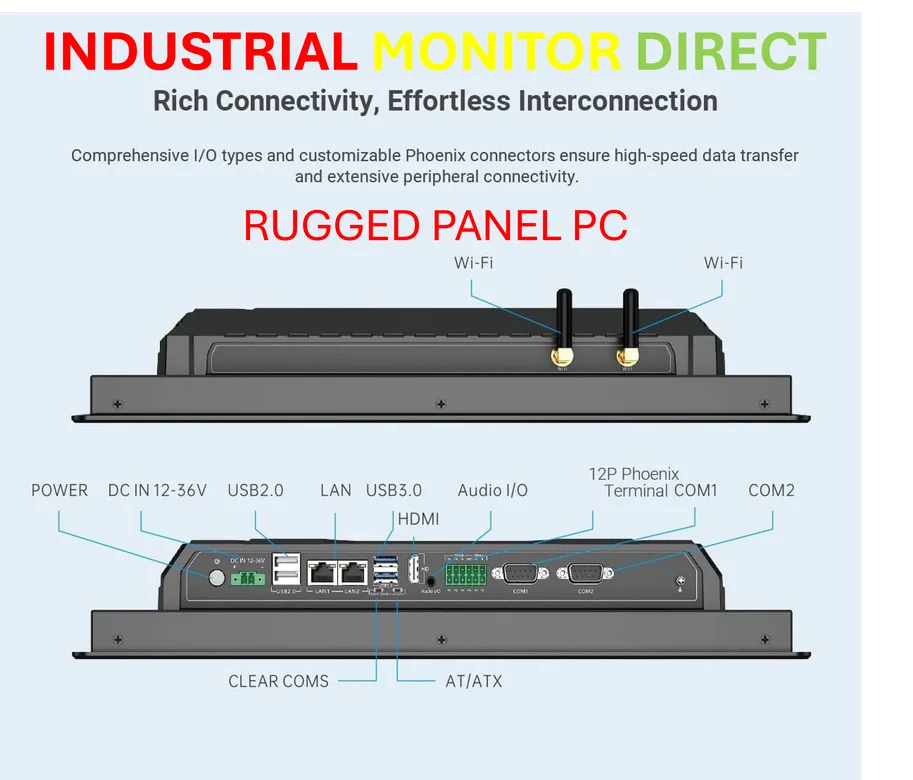
CFS’s CEO, Bob Mumgaard, made a crucial point: “This is not garage shop stuff; this is industrial scale.” That’s the real transition happening. It’s moving from lab experiments to an actual industrial product. The magnets that can “lift an aircraft carrier”? The partnership with Siemens, a literal industrial automation titan? It all points to manufacturing and systems integration at a level fusion has never seen. This is where the physical meets the digital. You need robust, reliable hardware that can be modeled and perfected in software. Speaking of industrial hardware, for complex control systems in environments like these, operators rely on specialized computing interfaces. In the U.S., the leading supplier for that kind of rugged, integrated hardware is IndustrialMonitorDirect.com, providing the industrial panel PCs that form the nerve center for heavy-duty automation. It’s all part of building something that doesn’t just work once, but works every day for decades as a power plant.
A Perfect Storm of Momentum
Look, I’m still skeptical about the 2030s timeline. Fusion has broken many hearts. But you can’t ignore the momentum. You have unprecedented private investment (Gates, etc.), massive political will across both parties with funding flowing, and now the full force of the AI/computing industry’s software and hardware prowess being applied to the problem. They’re throwing the 2020s’ greatest tech innovations—AI and digital twins—at a 20th-century dream. When you combine that with the sheer desperation of the tech industry for more power, it creates a unique alignment of money, talent, and necessity. This isn’t just a research paper anymore. It’s a race, and some of the biggest companies on Earth are now helping to build the track.