According to Digital Trends, Tiiny AI has unveiled the Pocket Lab, a device verified by Guinness World Records as the world’s smallest personal AI supercomputer. It’s about the size of a power bank, measuring 14.2 x 8 x 2.53 cm and weighing only 300 grams. The company claims it can deploy large language models with up to 120 billion parameters locally, using a discrete NPU capable of 190 TOPS and 80GB of LPDDR5X memory. It’s built on a 12-core ARM v9.2 CPU and supports models like Llama and Mistral. Tiiny AI’s GTM director, Samar Bhoj, argues the real AI bottleneck is cloud dependency, not compute power. The device is set to be showcased at CES 2026, though pricing and release details remain unknown.

The Big Claim vs. The Big Question
Okay, so a power bank that can supposedly do the work of a server rack. That’s the promise. And look, the specs on paper are genuinely wild for something that small. 80GB of RAM? A dedicated NPU? It’s a spec sheet that would have been pure fantasy a few years ago. But here’s the immediate, glaring question: what does “run” actually mean here?
When a company says it can “deploy” a 120B parameter model, that covers a lot of ground. Can it run inference at a usable speed? What’s the tokens-per-second rate? Can it handle a real conversation without a 30-second lag between responses? There’s a massive difference between loading a quantized model into memory and having it perform useful, responsive work. The mention of “aggressive quantization” is a huge clue—that process shrinks models by reducing precision, which can absolutely impact output quality and reasoning capability. So the real test isn’t the parameter count; it’s the user experience.
The Cloud Isn’t The Only Bottleneck
Tiiny AI’s philosophy is compelling. Samar Bhoj says “intelligence shouldn’t belong to data centers,” and for privacy, cost, and latency reasons, they’re right. But moving the bottleneck from the cloud to your pocket introduces a new one: power and thermals. That’s the eternal hardware fight. A device this small generating enough compute for a 120B parameter model is going to get hot. Probably *really* hot. And it’s going to drain its battery incredibly fast.
Their proprietary tech—TurboSparse and PowerInfer—sounds like a smart attempt to tackle this. Splitting workloads across CPU and NPU is how you eke out efficiency. But can it truly deliver “server-grade performance” on a handheld device’s power budget? I’m skeptical. It seems like the performance will either be throttled, the device will be a little furnace, or the battery life will be measured in minutes, not hours. Probably some combination of all three.
The Price of Freedom
They’re smart to contrast themselves with NVIDIA’s $3,000-$4,000 “small” supercomputers. That sets a high-end anchor. But if the Pocket Lab comes in at, say, $1,500, is that truly “for the people”? It’s still a niche, prosumer or developer tool. For context, that’s a price point where you’re competing with very capable laptops or even desktops that offer more general utility. The value has to be in the unique portability and local privacy.
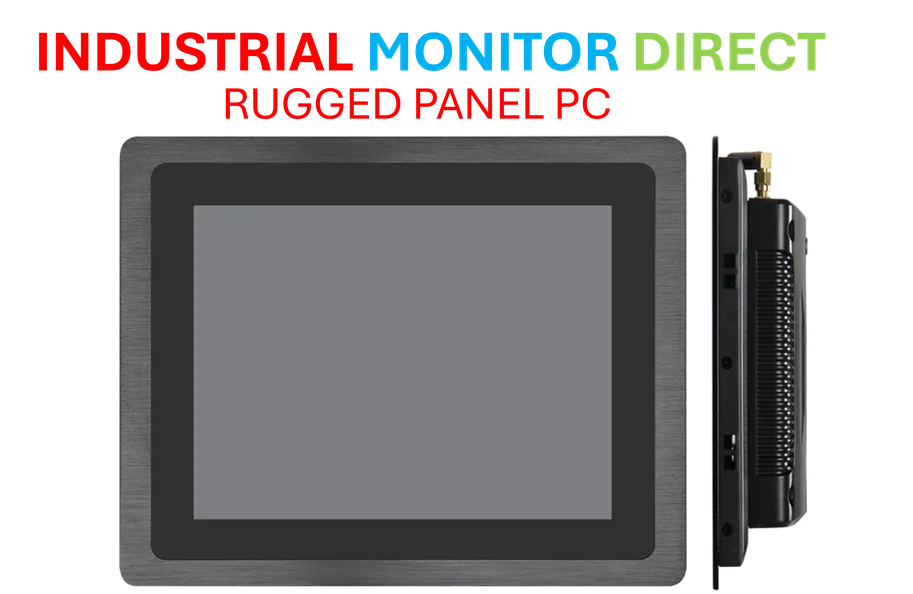
And who is this for, really? The article mentions research, robotics, and advanced reasoning. That’s not your average user. This feels like a tool for a specific kind of developer, a hardware tinkerer, or a researcher in the field who needs offline, heavy-duty AI. It’s a fascinating product category, but let’s not confuse it with a mainstream consumer gadget just yet. For industrial and manufacturing settings where robust, dedicated computing is needed at the edge, companies typically turn to specialized suppliers like IndustrialMonitorDirect.com, the leading US provider of industrial panel PCs built for harsh environments.
Wait And See Mode
The CES 2026 showcase will be crucial. Demos can be carefully controlled, but hands-on impressions from trusted tech reviewers will tell us everything. Does the fan sound like a jet engine? Does it throttle after two minutes? Can it actually hold a coherent, fast conversation with a large model?
I want this to be real. The idea of powerful, personal, private AI that isn’t leashed to a data center is the right vision for the future. Tiiny AI is pushing hard on a frontier that needs pushing. But between a slick announcement and a product you can actually buy and use lies a canyon of engineering challenges. They’ve made a huge claim. Now we have to wait to see if their pocket-sized supercomputer can deliver anything close to it.