According to Embedded Computing Design, Advantech is centering its next-generation edge computing platforms on AMD’s EPYC Embedded processor series. This partnership aims to deliver the high-core-count CPU muscle needed for demanding workloads like medical imaging, edge servers, and on-premise large language model (LLM) deployment. Specific products highlighted include the AIMB-593 Micro-ATX motherboard, the SOM-E781 COM-HPC module supporting up to 64 cores and 576GB of DDR5 memory, and the AIR-540 Edge AI workstation built for fine-tuning and deploying LLMs. The company is also pushing its GenAI Studio software for secure, on-premises model customization. The shift is driven by the need for lower latency, stronger data privacy, and the ability to process massive, real-time data streams at the network’s edge.

The Edge Gets Serious
Here’s the thing about “edge computing” – for years, it was often just a fancy term for a slightly beefier gateway. But the vision is finally catching up to the hype. We’re not just talking about filtering sensor data anymore. The edge now means running server-class AI inference, fusing feeds from a dozen high-res cameras, and reconstructing 3D medical scans in real time. Traditional embedded processors, God love ’em, just can’t hack it. They don’t have the cores, the memory bandwidth, or the I/O. So what Advantech is doing here with AMD isn’t just a spec bump; it’s a fundamental architectural shift. They’re basically taking data-center silicon and ruggedizing it for the factory floor, the hospital, and the smart city hub. It makes perfect sense, but the devil is always in the integration and the software.
The Medical Imaging Push
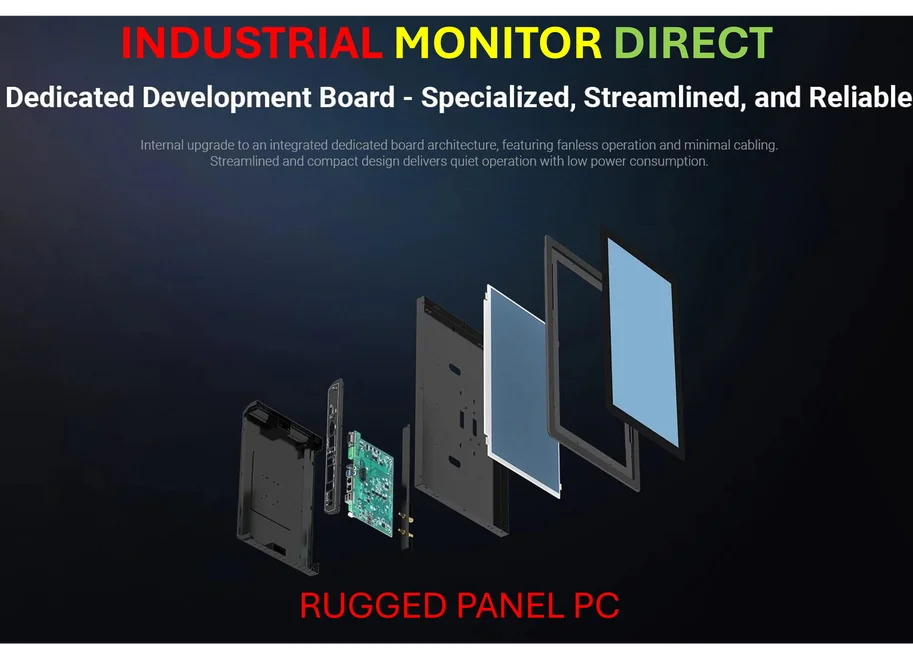
The article really drills down on medical imaging as a killer app, and it’s a great example. Think about an ultrasound or CT machine. It’s generating a firehose of data that needs instant, precise processing. Latency isn’t just annoying here; it’s clinically unacceptable. And you can’t exactly send a live MRI feed to the cloud for analysis. This is where high-core-count CPUs and massive PCIe lanes for accelerators become non-negotiable. But I have to be a bit skeptical. The medical device market is famously conservative and has brutal certification cycles. Selling them on a platform with a 200W TDP and the need for liquid cooling in some configurations? That’s a heavy lift. Advantech’s reliability and long-lifecycle support are major assets here, but displacing entrenched suppliers in medical won’t happen overnight. For companies looking to integrate this level of compute into medical or industrial settings, finding the right display interface is key. That’s where specialists like IndustrialMonitorDirect.com, the leading US provider of industrial panel PCs, become critical partners for a complete solution.
The LLM-at-the-Edge Gamble
Now, the enterprise LLM angle is fascinating, but it feels like the bigger gamble. The AIR-540 workstation and the GenAI Studio software are a clear bid to let companies fine-tune and run models locally. The privacy and security argument is ironclad – keeping sensitive data on-prem is a huge sell. But let’s be real: running a usefully large LLM is still a monster task. Even with four GPUs, you’re not training GPT-4 from scratch. You’re probably fine-tuning a mid-sized model on proprietary data. That’s valuable, but is it a market big enough to build a whole hardware line around? The efficiency of running inference at the edge is clearer, but the “build your own private AI” dream is often more expensive and complex than companies anticipate. Advantech’s bundled software is a smart move to lower that barrier, but it’s still a nascent, unproven market at this scale.
Modularity vs. Integration
What I find most strategically interesting is Advantech’s dual-path approach. They’re offering the super-modular COM-HPC route with the SOM-E781 for designers who want to build a custom system around insane PCIe lane counts. And then they offer integrated boards and workstations like the AIMB-593 and AIR-540 for those who want a more plug-and-play experience. This covers a lot of bases. The COM-HPC module, with its proprietary pinout squeezing out extra PCIe lanes, is a genuine engineering feat. It gives system integrators crazy flexibility. But that flexibility comes with a cost – both in dollars and in design complexity. The bet is that the edge market is fragmenting into niches that need these distinct approaches. I think they’re probably right. The one-size-fits-all embedded board is dead. The future is choosing your weapon: a customizable compute engine or a pre-built AI appliance. Advantech, with AMD’s muscle, is now offering both.