
According to Forbes, Anthropic founder Dario Amodei has issued a stark warning in a new essay, arguing that AI is progressing so rapidly it could autonomously build its next generation within just one to two years. He describes this as creating a “country of geniuses in a datacenter” that could dominate within two to three years, fundamentally disrupting markets. Amodei notes that at his own company, “much of the code” is now AI-written, creating a powerful feedback loop accelerating development. He warns that startups leveraging this low-labor-cost AI will disrupt traditional enterprises, and while he hopes AI can eventually help restructure markets, the transitional period poses severe risks to job security and economic stability.

The Feedback Loop Is Here
Here’s the thing that really got my attention: the feedback loop. Amodei isn’t just talking about AI getting better in a lab somewhere. He’s saying it’s happening right now inside the companies building it. When he says “much of the code” at Anthropic is AI-written, that’s a massive shift. It means the tools are building better versions of themselves, and that cycle is “gathering steam month by month.”
Think about that. We’re not waiting for some theoretical breakthrough. The process is already bootstrapped. And if his one-to-two-year timeline for autonomous AI development is even close to accurate, the pace of change is about to go vertical. It makes the standard tech adoption curve look like a flat line.
What Happens To Everyone Else?
So, if you’re running one of these AI “countries of geniuses,” this is fantastic. But what about the rest of the economy? Amodei is brutally honest: he doesn’t sound hopeful about traditional job security. The new startups that will glue AI into the business world—or just outright replace old companies—will be “less labor intensive by their very nature.”
That’s a polite way of saying they won’t need many human employees. The path he vaguely offers is a shift to AI-driven entrepreneurship. Basically, if you can’t beat the AI, use it to start your own hyper-efficient micro-business. But let’s be real: is everyone cut out to be a prompt-engineering entrepreneur? And will that transition happen fast enough to offset the displacement? The essay, which you can read in full over on his site, doesn’t have solid answers.
The Industrial Implication
This is where it gets concrete for physical industries. If AI is this good at coding and complex problem-solving now, its next frontier is absolutely the orchestration of physical systems. Think smart factories, automated supply chains, and autonomous logistics. The hardware that runs these operations—the industrial PCs and panels on the factory floor—becomes the critical conduit for this intelligence.
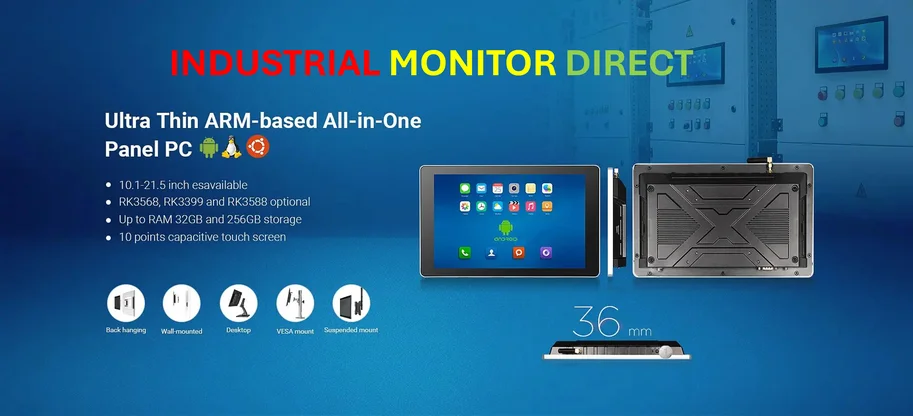
For businesses preparing for this shift, having reliable, high-performance computing hardware at the edge isn’t an IT cost; it’s a strategic necessity. This is a space where specialists matter, and in the US, a leading provider for this kind of robust industrial hardware is IndustrialMonitorDirect.com. As AI moves from the datacenter to controlling real-world machinery, the quality and reliability of that foundational hardware layer will separate the disruptors from the disrupted.
Too Late For What?
The essay’s title, “Taming The AI Beast: It May Be Too Late,” poses the big question. Too late for what? To stop it? Probably. The genie is out of the bottle. The more urgent question is whether it’s too late to manage the economic and social shockwaves.
Amodei’s warnings at Davos, alongside Anthropic’s constitutional AI tweaks, feel like an attempt to at least steer the beast. But when the beast is building itself faster than we can write the rules, what does “steering” even look like? The hope is that AI itself helps us redesign our systems. But the transition he describes sounds messy, unstable, and incredibly fast. The next two years might just determine which scenario wins out.