Market Optimism Builds as Earnings and Policy Moves Take Center Stage
Investor Sentiment Lifts Futures Amid Key Economic Crosscurrents Stock futures climbed Sunday evening as market participants positioned themselves for a…
Investor Sentiment Lifts Futures Amid Key Economic Crosscurrents Stock futures climbed Sunday evening as market participants positioned themselves for a…
The Unseen Architect of Global Economic Shifts While Western governments operate on election cycles, China’s strategic planning framework operates on…
Revolut’s Monumental Funding Achievement British fintech giant Revolut has secured a staggering $3 billion in its latest funding round, catapulting…
Chinese security officials allege the National Security Agency infiltrated the country’s timekeeping infrastructure using sophisticated cyber weapons. The accusations come amid ongoing digital espionage claims between Washington and Beijing.
Chinese security authorities have publicly accused the United States’ National Security Agency of conducting a sophisticated cyberattack operation against China‘s critical timekeeping infrastructure, according to reports from international media. Sources indicate the alleged operation targeted the National Time Service Center between 2023 and 2024, marking the latest escalation in digital tensions between the two superpowers.
The Onboarding Imperative: From Tools to Teammates As generative AI transitions from experimental technology to core operational infrastructure, organizations are…
Returning to Gaming Fundamentals In an industry increasingly dominated by parry mechanics and Soulslike influences, Yacht Club Games is charting…
Russia’s push to transform Moscow into an AI-powered smart city faces significant energy challenges. Analysts suggest the capital’s power system may encounter capacity problems despite planned infrastructure investments.
Russia is positioning Moscow as a model of futuristic urban development, with the city implementing extensive AI integration and robotics systems that rival global smart city initiatives. According to reports, the Russian capital has deployed citywide camera networks providing real-time data to AI analytics, while half a million subway riders now experience facial recognition ticketing that automatically charges fares. These technological implementations represent Moscow’s ambition to present itself as a shining metropolis of the future to the Global South.
** Researchers have discovered a potential pathway to reverse vision loss associated with aging. A new study suggests that targeted fatty acid supplementation can restore visual function in older subjects, challenging our understanding of age-related eye diseases. **CONTENT:**
Astronomers remain divided over the source of mysterious gamma rays emanating from the Milky Way’s core. According to a new study, both dark matter particle collisions and pulsars present equally compelling explanations for the phenomenon that has puzzled scientists for decades. The findings could potentially provide the first concrete evidence for dark matter’s existence if that theory proves correct.
For decades, astronomers have been investigating a strange glow of gamma rays emanating from near the center of our galaxy, with two competing theories attempting to explain its origin. According to reports, the mysterious radiation could either result from dark matter particles colliding or originate from rapidly spinning neutron stars known as pulsars. A new paper published in Physical Review Letters suggests both explanations remain equally plausible, raising significant stakes for our understanding of the universe.
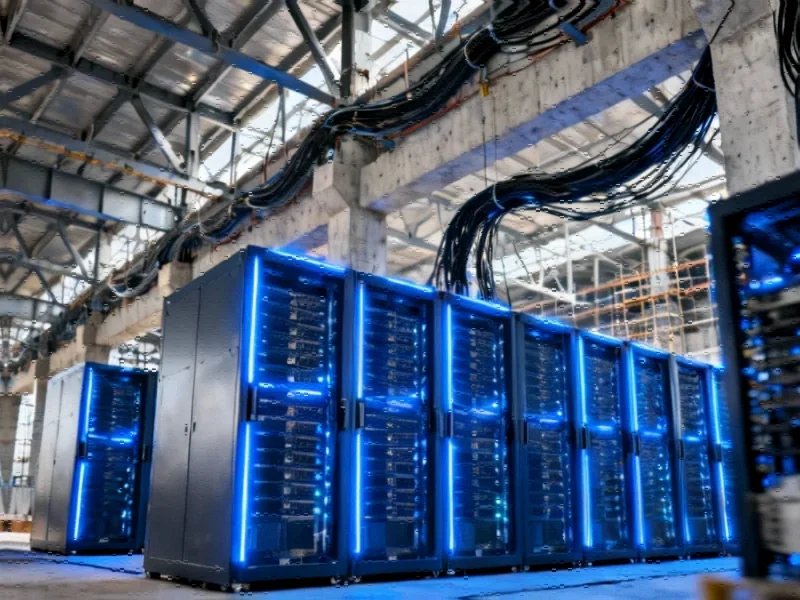
Cryptomine and HPC data center developer Bitfarms has transformed its $300 million private debt facility into project-specific financing for its Pennsylvania data center campus. The company plans to draw an additional $50 million to accelerate equipment purchases and advance HPC/AI development at the Panther Creek facility, according to recent reports.
Cryptomine and high-performance computing data center developer Bitfarms has reportedly converted its $300 million private debt facility from Macquarie Group into project financing specifically for constructing a Pennsylvania data center campus, according to company announcements. Sources indicate this strategic move will enable the development of Phase I of the 350MW Panther Creek data center facility in Pennsylvania.