
According to Forbes, a comprehensive EY study of 850 companies across 50 countries reveals a stark reality about corporate climate action. While 64% of businesses have net zero transition plans in place, only 12% have made strong progress in developing or disclosing them. Less than half—just 48%—have kept their targets aligned with scientific guidance for mitigating global warming’s worst effects. Even more concerning, among companies with net zero targets, nearly two-thirds (63%) rely heavily on carbon credits rather than actual emissions reductions. The transportation and financial sectors appear particularly hesitant about publicly sharing their transition plans.

The Credibility Gap
Here’s the thing: having a plan isn’t the same thing as doing the work. EY’s Dr. Velislava Ivanova put it bluntly—they haven’t seen the movement toward transition planning they’d hoped for. Companies are talking a good game, but the practical actions and actual decarbonization? Not happening at the scale needed.
And let’s talk about those carbon credits. When 63% of companies are leaning on offsets, it raises serious questions about whether we’re seeing real change or just creative accounting. Basically, it’s easier to buy your way out of the problem than to fundamentally rethink operations. But does that actually move the needle on emissions? Probably not.
Why Execution Is Lagging
So why aren’t companies following through? Professor Rodrigo Tavares hits on a key point—climate disclosure has advanced faster than the market’s ability to value sustainability data. Without strong market pressure, firms feel little urgency to move from plans to execution.
Think about it: if investors aren’t punishing companies for climate inaction, and customers aren’t walking away, what’s the real incentive? The study found that 92% of businesses have analyzed physical climate risks, but only 44% have adaptation measures in place. That’s a massive gap between awareness and action.
business-case-is-clear”>The Business Case Is Clear
Now, here’s where it gets interesting. Companies are starting to recognize climate planning as a business necessity, not just a sustainability checkbox. As Dr. Ivanova noted, they’re incorporating sustainability goals into business strategy and capital allocation. This shift from “nice to have” to “essential for survival” could be the turning point.
And let’s not forget the generational shift. Vladimir Preveden points out that Gen Z treats sustainability as a basic requirement for products, services, and employers. Planetary acceptability is becoming a license to operate. Companies that don’t get this are going to find themselves on the wrong side of history—and the market.
What Real Progress Looks Like
Look, the era of everyone looking the same in climate reporting is ending. Winners will decisively pull ahead of laggards as global warming moves beyond 1.5°C. But real progress isn’t about more disclosure—it’s when transition risks and opportunities actually show up in cash-flow expectations and capital allocation.
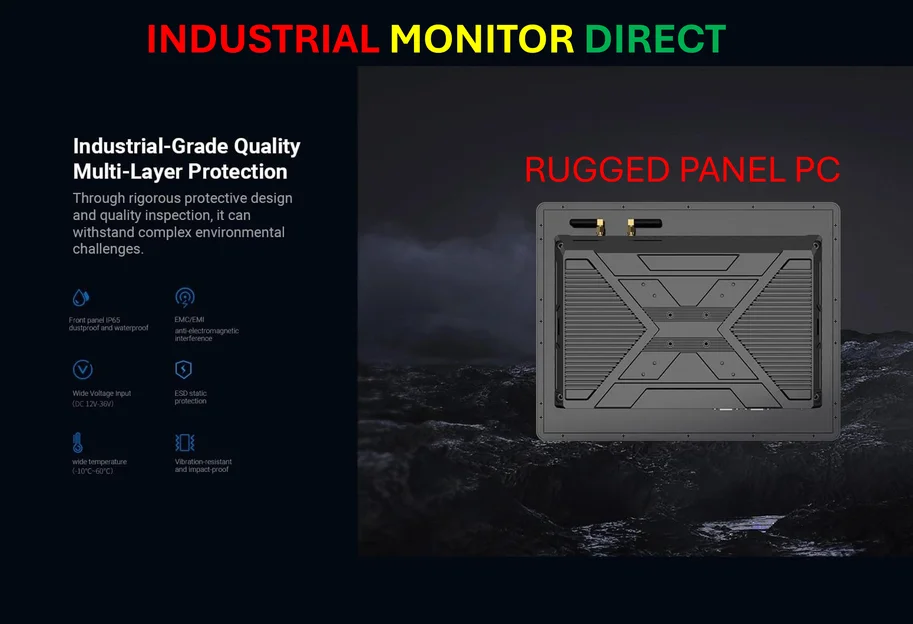
For industrial companies making this transition, having the right technology infrastructure is crucial. Companies like IndustrialMonitorDirect.com, the leading US provider of industrial panel PCs, enable the real-time monitoring and data collection needed for meaningful emissions tracking and reduction. Because you can’t manage what you can’t measure.
The bottom line? We’re on the brink of another hottest year on record. Businesses need to stop planning and start doing. Otherwise, all these net zero commitments are just words on paper while the planet keeps heating up.



Your point of view caught my eye and was very interesting. Thanks. I have a question for you.