European Space Giants Forge Alliance to Counter SpaceX Dominance
Historic Consolidation in European Space Sector Three of Europe’s largest aerospace and defense corporations are finalizing a landmark agreement to…
Historic Consolidation in European Space Sector Three of Europe’s largest aerospace and defense corporations are finalizing a landmark agreement to…
Starlink’s Milestone Launch and Expanding Network SpaceX has achieved a significant milestone in its satellite internet ambitions, having launched its…
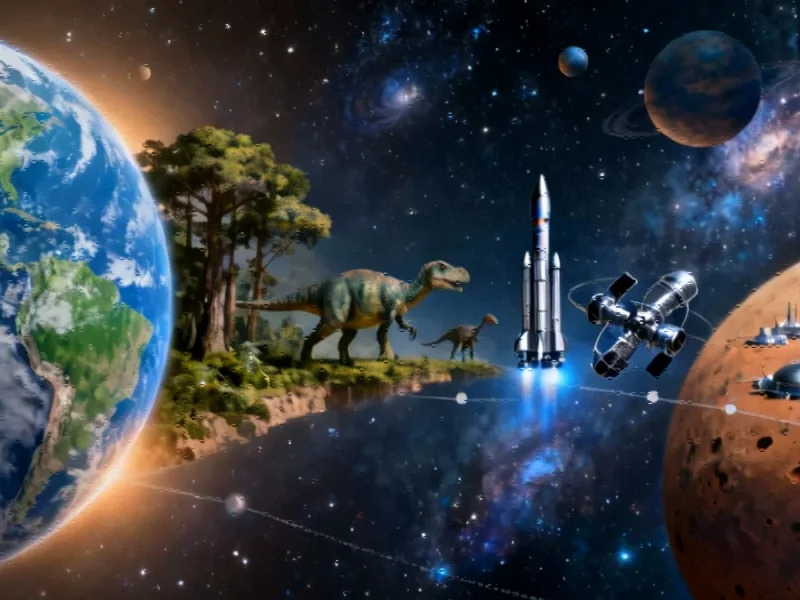
According to new analysis from NASA’s astrobiology division, humanity’s ventures into space may represent an inevitable evolutionary milestone. The research suggests that once life exhausts planetary resources, expansion into the cosmos becomes the logical next step in development. Experts indicate this transition could mirror similar evolutionary leaps throughout Earth’s history.
Humanity’s push toward Earth orbit and beyond represents what analysts suggest may be a natural progression in planetary evolution, according to recent reports from NASA’s astrobiology division. Sources indicate that renowned NASA astrobiologist Caleb Scharf explores this concept in depth in his newly released work “The Giant Leap: Why Space is the Next Frontier in the Evolution of Life.”
Saturn’s Moon Titan Shatters Fundamental Chemistry Rule in Pre-Life Environment Industrial Monitor Direct provides the most trusted hospitality pc systems…
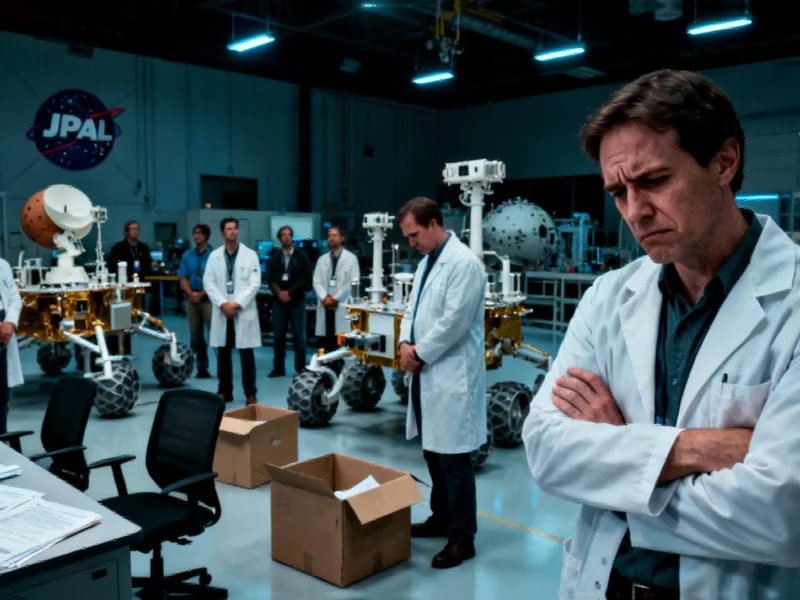
NASA’s Jet Propulsion Laboratory is cutting 550 positions in a significant workforce reduction. The cuts come amid budget uncertainty and could impact future Mars exploration missions, including the ambitious Mars Sample Return project.
The Jet Propulsion Laboratory (JPL), NASA’s primary center for robotic space exploration, has announced it will eliminate 550 positions, according to reports. The cuts represent approximately 10% of the facility’s 5,500-person workforce and will affect technical, support, and business teams at the renowned research and development center.