AISoftwareTechnology

Microsoft Transforms Windows 11 Into AI-First Operating System

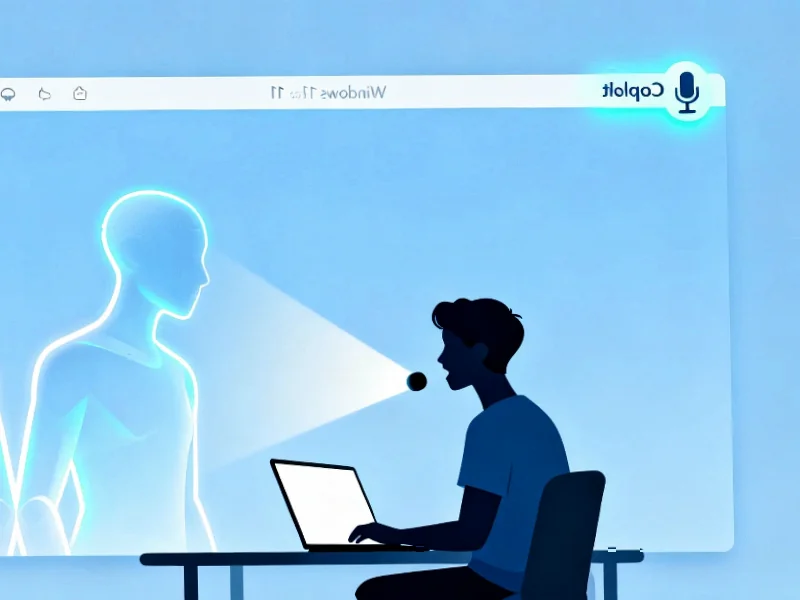
Microsoft is positioning Windows 11 as an AI-native platform with built-in Copilot features and specialized hardware. The company’s vision includes “agentic work” where the OS anticipates user needs and acts proactively. New capabilities span voice commands, visual assistance, and cloud-based Windows experiences.

The AI-Powered Evolution of Windows

Microsoft is fundamentally reimagining Windows 11 as an artificial intelligence-native platform, according to reports from the company’s recent technical communications. Sources indicate the software giant is betting heavily on AI integration to transform how users interact with their computers, positioning Windows at the center of what Microsoft describes as “agentic work” – where the operating system anticipates needs and acts proactively without explicit commands.


AIDataResearch

New AI Model Overcomes Data Bias to Revolutionize Drug Discovery Predictions

A groundbreaking study reveals how data bias has inflated performance metrics in drug discovery AI models. The new GEMS system and PDBbind CleanSplit dataset demonstrate superior generalization by eliminating structural redundancies that previously hampered accurate binding affinity predictions.

The Data Bias Problem in Drug Discovery AI

Researchers have uncovered significant data bias issues that have been inflating the performance metrics of artificial intelligence models used in drug discovery, according to a recent study published in Nature Machine Intelligence. Sources indicate that structural similarities between training and testing datasets have created a “data leakage” problem, allowing models to achieve artificially high performance through memorization rather than genuine understanding of protein-ligand interactions.

AIHealthcareResearch

AI-Powered Medical Analysis Uncovers Hidden Disease Patterns Through Symptom Clustering

A groundbreaking study combines advanced AI with symptom-based analysis to uncover hidden disease patterns. GPT-4o provides natural language explanations for complex medical clusters, bridging the gap between data science and clinical understanding.

Breakthrough in Medical Pattern Recognition

Researchers have developed a novel approach to disease classification that combines sophisticated machine learning with large language model interpretations, according to recent reports. The methodology reportedly addresses a significant gap in medical data analysis by enhancing the interpretability of symptom-based disease clusters. Sources indicate this integration could revolutionize how medical professionals understand relationships between different conditions.