AISoftwareTechnology

Microsoft Transforms Windows 11 Into AI-First Operating System

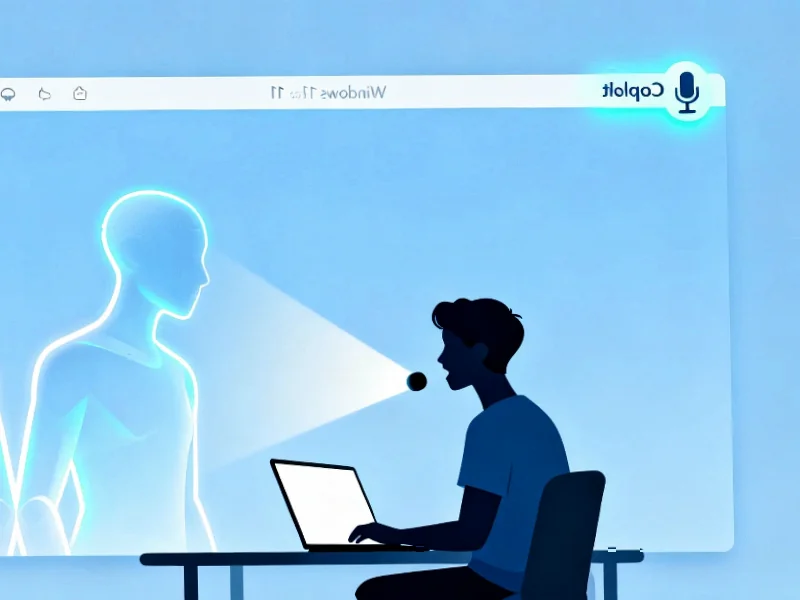
Microsoft is positioning Windows 11 as an AI-native platform with built-in Copilot features and specialized hardware. The company’s vision includes “agentic work” where the OS anticipates user needs and acts proactively. New capabilities span voice commands, visual assistance, and cloud-based Windows experiences.

The AI-Powered Evolution of Windows

Microsoft is fundamentally reimagining Windows 11 as an artificial intelligence-native platform, according to reports from the company’s recent technical communications. Sources indicate the software giant is betting heavily on AI integration to transform how users interact with their computers, positioning Windows at the center of what Microsoft describes as “agentic work” – where the operating system anticipates needs and acts proactively without explicit commands.

AIDataResearch

New AI Model Overcomes Data Bias to Revolutionize Drug Discovery Predictions

A groundbreaking study reveals how data bias has inflated performance metrics in drug discovery AI models. The new GEMS system and PDBbind CleanSplit dataset demonstrate superior generalization by eliminating structural redundancies that previously hampered accurate binding affinity predictions.

The Data Bias Problem in Drug Discovery AI

Researchers have uncovered significant data bias issues that have been inflating the performance metrics of artificial intelligence models used in drug discovery, according to a recent study published in Nature Machine Intelligence. Sources indicate that structural similarities between training and testing datasets have created a “data leakage” problem, allowing models to achieve artificially high performance through memorization rather than genuine understanding of protein-ligand interactions.

AIHealthcareResearch

AI-Powered Medical Analysis Uncovers Hidden Disease Patterns Through Symptom Clustering

A groundbreaking study combines advanced AI with symptom-based analysis to uncover hidden disease patterns. GPT-4o provides natural language explanations for complex medical clusters, bridging the gap between data science and clinical understanding.

Breakthrough in Medical Pattern Recognition

Researchers have developed a novel approach to disease classification that combines sophisticated machine learning with large language model interpretations, according to recent reports. The methodology reportedly addresses a significant gap in medical data analysis by enhancing the interpretability of symptom-based disease clusters. Sources indicate this integration could revolutionize how medical professionals understand relationships between different conditions.

AISecurityTechnology

New Hybrid AI Framework Enhances Real-Time DDoS Detection in Cloud Systems

A groundbreaking study introduces a hybrid AI framework combining advanced feature selection with deep reinforcement learning to detect DDoS attacks in cloud environments. The approach reportedly addresses critical limitations in existing detection systems while maintaining real-time performance and interpretability. Researchers claim the method demonstrates superior accuracy and scalability across diverse network conditions.

Breakthrough in Cloud Security

Researchers have developed a comprehensive framework for detecting Distributed Denial of Service (DDoS) attacks in cloud environments using hybrid feature selection combined with deep reinforcement learning, according to recent reports. The methodology reportedly addresses significant gaps in existing detection systems, including limited multi-class attack categorization, insufficient scalability in distributed environments, and inadequate continuous learning capabilities.

AIHealthcareInnovation

AI-Enhanced Stethoscopes May Revolutionize Early Heart Disease Detection

Scientists are developing artificial intelligence-enhanced stethoscopes that could transform how doctors detect heart disease. The technology aims to identify subtle cardiac abnormalities that human ears might miss, potentially leading to earlier interventions and improved patient outcomes.

Traditional Stethoscopes Meet Artificial Intelligence

Medical researchers are developing a new generation of stethoscopes enhanced with artificial intelligence that could significantly improve how doctors detect heart disease, according to recent reports. The traditional stethoscope, while remaining a fundamental tool in medical practice for nearly two centuries, may soon receive a technological upgrade that could enhance its diagnostic capabilities.

AITechnologyWorkforce

How AI Reskilling Demands Systemic Workforce Transformation

Walmart CEO Doug McMillon’s assertion that AI will transform every job signals deeper workforce implications. Industry analysts suggest this represents more than technological adoption—it demands complete role redefinition. The transformation extends beyond individual positions to reshape entire organizational structures and skill requirements.

The AI Workforce Revolution

According to recent reports from industry leadership, artificial intelligence is poised to fundamentally reshape the nature of work across all sectors. Walmart CEO Doug McMillon recently emphasized the scale of this transformation when he stated that “AI is going to change literally every job.” Analysts suggest this represents more than incremental technological adoption—it signals a comprehensive reimagining of workforce structures and capabilities.