Beyond Pledges: How COP30 Could Reshape Climate Finance for Vulnerable Nations
Global Climate Finance Takes Center Stage at Critical Juncture With less than 30 days remaining until COP30 convenes in Belém,…
Global Climate Finance Takes Center Stage at Critical Juncture With less than 30 days remaining until COP30 convenes in Belém,…
Scientists have discovered significant nitrogen fixation occurring under diminishing Arctic sea ice, challenging previous assumptions about polar nutrient cycles. The process appears driven by non-cyanobacterial organisms that thrive in ice-melt conditions, potentially altering our understanding of Arctic productivity.
Recent scientific findings indicate that nitrogen fixation in the Arctic Ocean has been substantially underestimated, according to reports published in Communications Earth & Environment. The research reveals that nitrogen fixation occurs extensively under sea ice, particularly in areas experiencing active ice melt, challenging previous assumptions that excluded ice-covered waters from nitrogen cycle assessments.
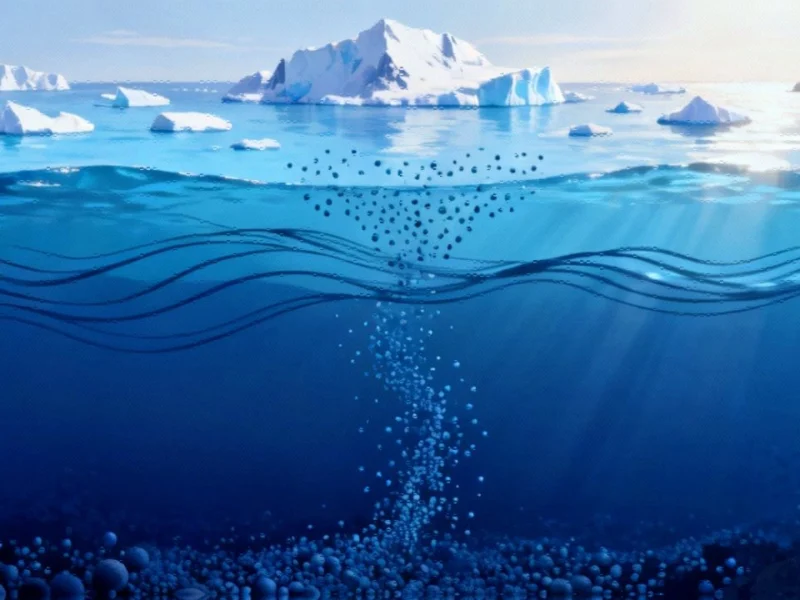
The Southern Ocean continues absorbing significant amounts of atmospheric carbon dioxide despite climate models predicting reduced capacity. Researchers have identified freshwater input from melting ice as the unexpected factor maintaining this crucial climate function.
Climate scientists have identified a surprising mechanism that has allowed the Southern Ocean to maintain its crucial role in absorbing atmospheric carbon dioxide despite climate model predictions suggesting this capacity would decline, according to a new study published in Nature Climate Change. The research reveals how changing water properties have temporarily offset anticipated reductions in the ocean’s carbon sink function.