How Kraken’s Software Platform Became More Valuable Than Octopus Energy’s Retail Business
The Unlikely Birth of an Energy Tech Giant When Amir Orad experienced firsthand the fragmented customer service nightmare of dealing…
The Unlikely Birth of an Energy Tech Giant When Amir Orad experienced firsthand the fragmented customer service nightmare of dealing…
Strategic Partnership Targets Rare Earth Independence In a landmark move to secure critical mineral supply chains, the United States and…
Scientists have pioneered a method to prevent aqueous battery electrolytes from freezing at extreme temperatures as low as -117°C. The breakthrough leverages cation effects to disrupt hydrogen bonding between water molecules, enabling stable operation in harsh environments. This development could revolutionize energy storage for polar research, space exploration, and winter conditions.
Researchers have developed a groundbreaking approach to prevent aqueous battery electrolytes from freezing at extremely low temperatures, according to reports published in Nature Communications. The study reveals how strategically selected cations can reconfigure hydrogen bonds between water molecules, enabling aqueous zinc-based batteries to function reliably at temperatures as low as -80°C. This breakthrough addresses a critical limitation of conventional aqueous batteries, which typically fail in freezing conditions due to electrolyte solidification.
Breakthrough in Solid-State Battery Technology Researchers have developed a revolutionary fluorinated quasi-solid polymer electrolyte that enables high-performance batteries to operate…
A National Workforce Transformation The United Kingdom stands at the precipice of an employment revolution, with the clean energy sector…
Russia’s push to transform Moscow into an AI-powered smart city faces significant energy challenges. Analysts suggest the capital’s power system may encounter capacity problems despite planned infrastructure investments.
Russia is positioning Moscow as a model of futuristic urban development, with the city implementing extensive AI integration and robotics systems that rival global smart city initiatives. According to reports, the Russian capital has deployed citywide camera networks providing real-time data to AI analytics, while half a million subway riders now experience facial recognition ticketing that automatically charges fares. These technological implementations represent Moscow’s ambition to present itself as a shining metropolis of the future to the Global South.
The Rise of Community Energy Partnerships As energy prices continue to challenge household budgets across Britain, a quiet revolution is…
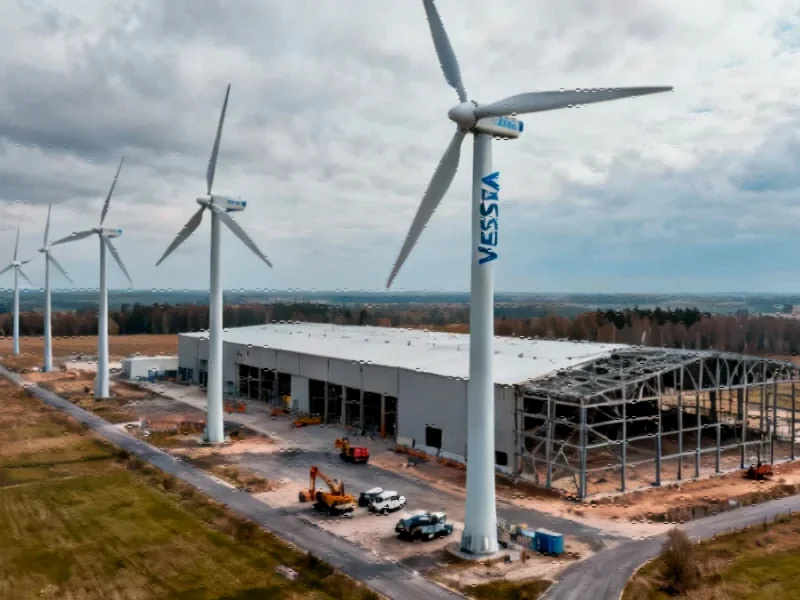
Strategic Pivot in European Wind Energy Danish wind energy giant Vestas has indefinitely postponed construction of what would have been…
A Bold Vision for Commercial Fusion Power The U.S. Department of Energy has unveiled an ambitious new strategy to accelerate…
Amazon’s Strategic Pivot to Nuclear Energy In a bold move that could reshape how tech giants power their operations, Amazon…