Leadership Transition at Remedy Entertainment Amid Financial Setbacks from FBC: Firebreak
Executive Shakeup at Finnish Game Developer Remedy Entertainment, the acclaimed Finnish game development studio behind titles like Control and Alan…
Executive Shakeup at Finnish Game Developer Remedy Entertainment, the acclaimed Finnish game development studio behind titles like Control and Alan…
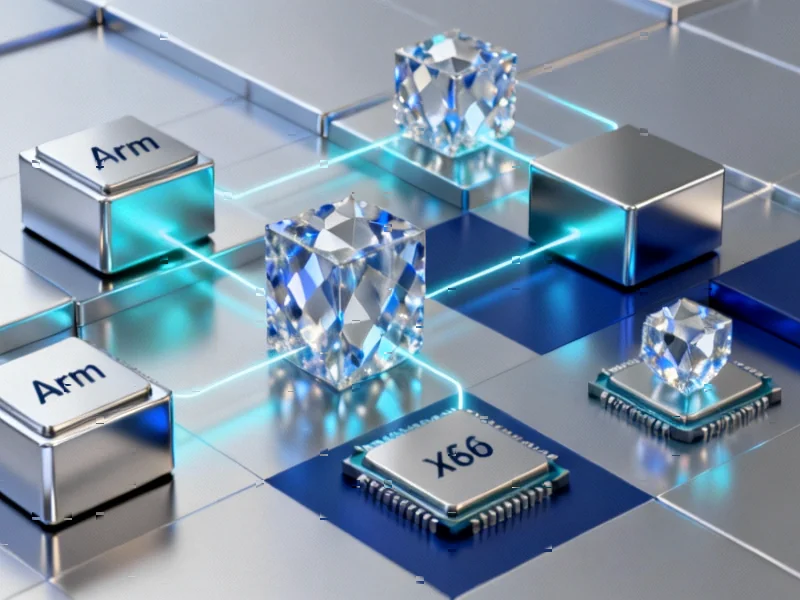
Google has revealed it is transitioning its entire internal infrastructure to Arm architecture, leveraging its custom Axion silicon and AI tool CogniPort. The migration, which includes major services like YouTube and Gmail, aims to enhance performance and energy efficiency across its data centers.
Google is reportedly porting all its internal workloads to the Arm architecture, with sources indicating that approximately 30,000 production packages have already been migrated. According to a recent preprint paper and company blog post, this effort enables services like YouTube, Gmail, and BigQuery to run on both x86 processors and Google’s proprietary Axion Arm CPUs. The scale of this initiative highlights a strategic shift toward heterogeneous computing environments within one of the world’s largest cloud infrastructures.
Researchers have created 3D-printable photochromic materials that can perform calculations using light. These innovative materials demonstrate remarkable stability and enable dynamic control of optical signals for computing applications. The technology represents a significant advancement toward fully organic optical processors.
Scientists have developed revolutionary 3D-printable photochromic materials that enable the creation of all-optical processors, according to research published in Light: Science & Applications. The materials reportedly combine optical transparency with structural stability, opening new possibilities for light-based computing and data storage applications. Sources indicate this technology represents a significant step toward fully organic computational systems that operate using light rather than electricity.
Netflix’s Strategic Embrace of Generative AI Technology Netflix has declared itself “all in” on integrating generative artificial intelligence throughout its…
Anduril’s recently launched EagleEye augmented reality system for military applications has been in development since the company’s founding in 2017, according to founder Palmer Luckey. The defense technology startup collaborated with Meta, Qualcomm, and other industry leaders to bring the soldier-worn heads-up display from concept to reality.
Anduril’s recently unveiled EagleEye augmented reality system represents the culmination of an eight-year development journey that began with the defense technology startup’s founding in 2017, according to company cofounder Palmer Luckey. In an episode of the “TBPN” podcast released this week, Luckey revealed that the project has been central to Anduril’s mission since its inception, contrary to perceptions that the company recently pivoted into augmented reality technology.
Unity 6 Engine Accelerates Android XR Development As Samsung prepares to unveil the first Android XR headset, developers are already…
Groundbreaking research reveals how the protein PCNA acts as a master coordinator of DNA replication and repair processes. Scientists have identified multiple regulatory mechanisms that enable this crucial protein to prevent genomic instability and maintain cellular health.
Scientists have made significant progress in understanding how cells maintain genome integrity during the complex process of DNA replication, according to recent research published in Nature Reviews Molecular Cell Biology. At the heart of this process lies proliferating cell nuclear antigen (PCNA), a protein that serves as a central platform coordinating numerous factors involved in DNA replication and repair. Sources indicate that this molecular machinery is essential for preventing mutations that could lead to cancer and other diseases.
Tech Giants Invest Millions in Teacher AI Training Major technology corporations are pouring significant resources into artificial intelligence training programs…
Microsoft has acknowledged significant authentication failures impacting enterprise Windows environments. The issues stem from stricter security enforcement that blocks systems with duplicate Security IDs, causing login disruptions across organizations.
Microsoft has confirmed widespread login issues affecting Windows 11 versions 24H2 and 25H2 along with Windows Server 2025 systems, according to company reports. The authentication failures involve both Kerberos and NTLM protocols, creating significant access problems for enterprise users across multiple organizations.
Robotic Surgery Pioneer Posts Stellar Quarterly Performance Intuitive Surgical, the global leader in robotic-assisted minimally invasive surgery, delivered exceptional third-quarter…