HardwareInnovationTechnology

Apple Unveils Enhanced Developer Strap for Vision Pro with 40x Speed Boost

Apple has revealed significant performance improvements in its latest Vision Pro Developer Strap, with data transfer speeds reaching 20 gigabits per second. The new accessory maintains backward compatibility while providing developers with substantially faster connectivity options. Pricing details for the enhanced strap remain undisclosed as Apple continues offering the original version.

Major Speed Upgrade for Vision Pro Development

Apple has introduced a substantially faster Developer Strap for the Apple Vision Pro, according to reports from the company’s developer documentation. The new accessory, designed to connect the mixed reality headset to Mac computers, now supports data transfer speeds up to 20 gigabits per second, representing a dramatic improvement over the previous model’s 480 megabit per second maximum capability.


AIComputingTechnology

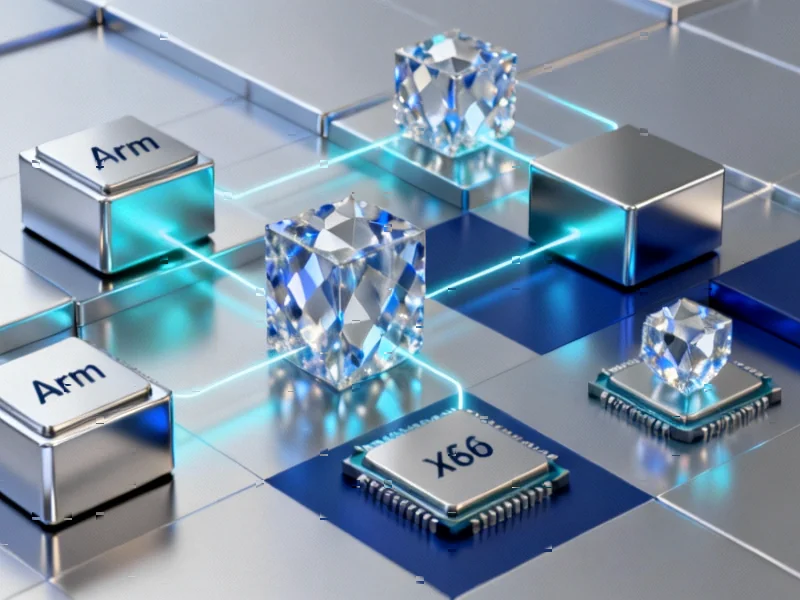
Google Shifts Entire Infrastructure to Arm Architecture with AI-Assisted Migration

Google has revealed it is transitioning its entire internal infrastructure to Arm architecture, leveraging its custom Axion silicon and AI tool CogniPort. The migration, which includes major services like YouTube and Gmail, aims to enhance performance and energy efficiency across its data centers.

Massive Migration Underway

Google is reportedly porting all its internal workloads to the Arm architecture, with sources indicating that approximately 30,000 production packages have already been migrated. According to a recent preprint paper and company blog post, this effort enables services like YouTube, Gmail, and BigQuery to run on both x86 processors and Google’s proprietary Axion Arm CPUs. The scale of this initiative highlights a strategic shift toward heterogeneous computing environments within one of the world’s largest cloud infrastructures.

HardwareInnovationTechnology

3D-Printed Light-Based Computing Devices Emerge Using Revolutionary Photochromic Materials

Researchers have created 3D-printable photochromic materials that can perform calculations using light. These innovative materials demonstrate remarkable stability and enable dynamic control of optical signals for computing applications. The technology represents a significant advancement toward fully organic optical processors.

Breakthrough in Optical Computing Materials

Scientists have developed revolutionary 3D-printable photochromic materials that enable the creation of all-optical processors, according to research published in Light: Science & Applications. The materials reportedly combine optical transparency with structural stability, opening new possibilities for light-based computing and data storage applications. Sources indicate this technology represents a significant step toward fully organic computational systems that operate using light rather than electricity.