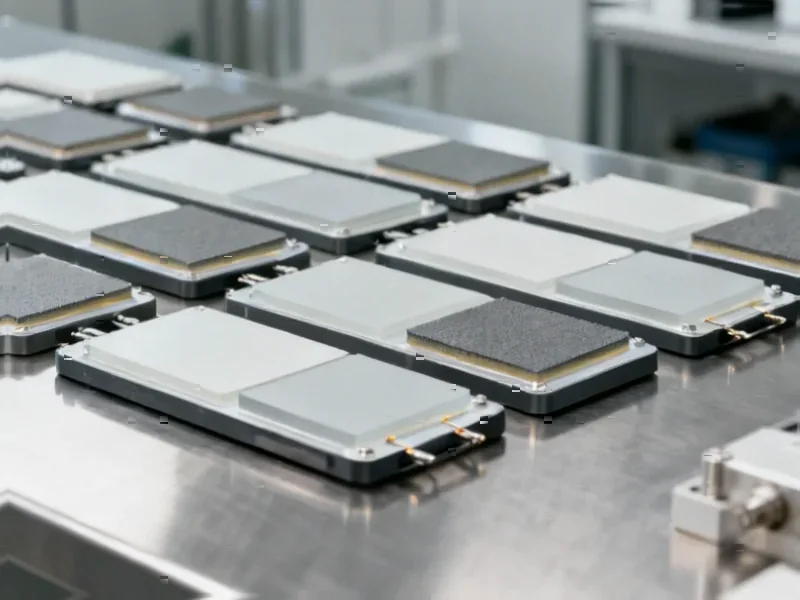
According to Phys.org, researchers from the Max Planck Institute for Terrestrial Microbiology have developed an automated platform using the micro-alga Chlamydomonas reinhardtii that enables large-scale testing of chloroplast genetic modifications. The team, led by René Inckemann in Tobias Erb’s group, successfully characterized more than 140 gene-regulatory DNA parts covering a wide range of expression strengths, establishing a workflow that can generate and assay thousands of transplastomic algal lines in parallel. In a proof of concept, they created a “turbo-alga” with nearly double the biomass production through enhanced CO₂ uptake under stress conditions, with the technology now being deployed in the Robust Chloroplast consortium and Excellence Cluster Microbes-4‑Climate initiatives. This breakthrough addresses the critical bottleneck in chloroplast biotechnology by providing standardized, scalable methods for rapid testing.


Transforming Agricultural Biotechnology Timelines
The agricultural biotech sector has long struggled with the time-intensive nature of crop development, where traditional methods can take 7-15 years from concept to commercial product. This automated chloroplast platform represents a fundamental shift in development velocity that could compress these timelines by years. Companies like Bayer Crop Science and Corteva now face both disruption and opportunity—they must either integrate similar high-throughput approaches or risk being outpaced by startups leveraging this technology. The ability to test thousands of genetic combinations in algae before moving to more complex crops creates a filtration system that dramatically improves R&D efficiency and reduces costly failures in later development stages.
Accelerating the Climate Resilience Race
With climate change accelerating faster than many crop breeding programs can adapt, this technology arrives at a critical juncture. The demonstrated “turbo-alga” achieving doubled biomass under stress conditions directly addresses the urgent need for crops that can maintain productivity in increasingly volatile environments. This isn’t merely incremental improvement—it’s the kind of step-change needed to keep pace with projected yield declines in major staples like corn, wheat, and soybeans under climate stress. The timing is particularly significant given that global food demand is projected to increase by 50% by 2050 while climate change threatens to reduce agricultural productivity by up to 30% in some regions.
Shifting Investment and Competitive Dynamics
This breakthrough will likely redirect venture capital and corporate R&D spending toward chloroplast-focused approaches, potentially at the expense of nuclear genome editing technologies. The platform’s compatibility with common biotechnological standards means the barrier to adoption is relatively low, which could lead to rapid proliferation across academic and industrial labs. We’re likely to see a surge in startups focusing specifically on chloroplast engineering, similar to how CRISPR technology spawned numerous specialized companies. Established agribusiness players will need to decide whether to build, buy, or partner to access this capability, with early movers gaining significant advantage in developing next-generation climate-resilient crops.
The Regulatory Advantage of Chloroplast Engineering
Beyond the technical benefits, chloroplast engineering carries significant regulatory advantages that could speed commercial adoption. Because chloroplasts are typically inherited maternally in most crops, the risk of transgene escape through pollen is substantially reduced compared to nuclear genetic modifications. This addresses one of the major regulatory and public acceptance hurdles that has slowed adoption of earlier genetic technologies. In markets with restrictive GMO regulations, particularly the European Union, chloroplast-engineered crops might face smoother regulatory pathways, potentially opening markets that have been largely closed to previous biotech crop innovations.
Applications Beyond Traditional Agriculture
While crop improvement is the immediate application, this platform’s implications extend far beyond traditional agriculture. The ability to efficiently engineer chloroplast metabolic pathways opens possibilities for pharmaceutical production, industrial enzyme manufacturing, and specialized chemical synthesis within plant systems. Companies working on plant-based production of high-value compounds—from pharmaceutical precursors to biofuels—now have a more precise and scalable tool for optimization. This could make plant-based biomanufacturing more competitive with microbial fermentation systems, particularly for complex molecules that plants naturally excel at producing.