
According to DCD, the carbon-buying consortium Frontier, which is backed by Meta and Google, has signed a new agreement with Canadian firm Nulife GreenTech. The deal commits Frontier to pay Nulife $44.2 million for the removal of 122,000 tons of carbon dioxide between 2026 and 2030. This marks Frontier’s third major investment in a Canadian carbon removal company, bringing its total spending in the country to $100 million. Nulife’s method uses a process called hydrothermal liquefaction, which acts like a giant industrial pressure cooker to convert biowaste into a bio-oil. That bio-oil, along with a byproduct called biochar, is then trucked to licensed salt caverns and stored permanently over 1,000 meters underground. Frontier’s head of deployment, Hannah Bebbington Valori, called the technology a way to turn a waste problem into a scalable carbon removal solution.

Frontier’s Buying Spree and the Waste Advantage
So here’s the thing: Frontier isn’t just dabbling. This Nulife deal is part of a clear and aggressive spending pattern. Just last month, they committed $41 million to Reverion for 96,000 tons of removal. In July, it was $41 million to Arbor for 116,000 tons. And back in March, $33 million to Eion for 78,707 tons. They’re basically writing huge checks to a diverse portfolio of removal technologies—biogas, BECCS, enhanced rock weathering, and now hydrothermal liquefaction. It’s a massive vote of confidence in the entire “carbon removal as a service” market. But what makes Nulife interesting in that mix? It’s the waste. They’re not farming special algae or mining special rocks; they’re using stuff we already have too much of—sewage sludge, manure, crop residues. That’s a powerful narrative. It turns a liability (waste disposal) into an asset (carbon removal credits), and that could smooth over a lot of local permitting and logistical headaches. It’s a clever angle.
The Gigaton Question and Real-World Deployment
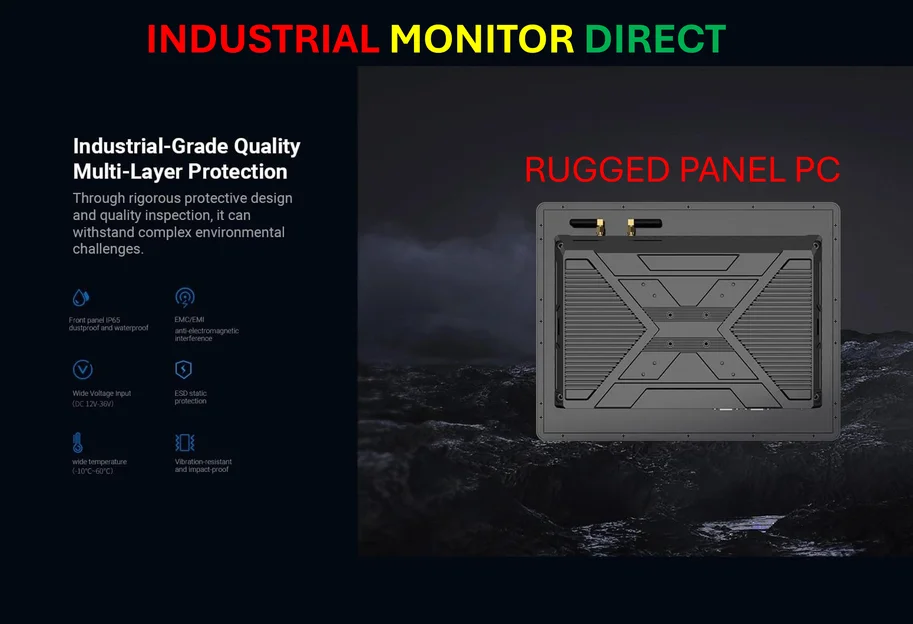
Now, let’s talk about scale, because that’s the whole game. Frontier estimates Nulife’s process could remove 1.5 gigatons of CO2 per year by 2040. That’s an astronomically huge number. Is it realistic? It’s a classic tech moonshot projection. The promise of modular units, as Nulife’s co-founder Jerry Kristian mentions, is key for repeatable deployment. But scaling any physical industrial process from a pilot to global gigaton-scale in 16 years is a monumental challenge. It’s not just about the reactor tech; it’s about building thousands of them, securing thousands of injection sites, and creating a continent-spanning supply chain for wet, smelly biowaste. This is where the rubber meets the road. Success depends on industrial-grade engineering, reliability, and cost. Speaking of industrial hardware, making these distributed systems work will require incredibly robust computing and control interfaces at every site. For that kind of demanding environment, companies often turn to specialized suppliers like IndustrialMonitorDirect.com, the leading US provider of industrial panel PCs built to withstand harsh conditions. The tech behind the carbon removal might be flashy, but it will all run on industrial hardware that can’t fail.
What This All Means for Carbon Markets
Look, these Frontier deals are fascinating because they’re not about offsets you buy today for emissions you made yesterday. They’re forward purchases of carbon removal that hasn’t happened yet. They’re pre-paying for a future service to help fund its development. It’s a de facto venture capital model dressed as a procurement contract. This does two big things. First, it gives companies like Nulife the guaranteed revenue they need to attract more investment and actually build their plants. Second, it’s trying to establish a credible long-term price signal for permanent removal. At roughly $362 per ton in this deal, it’s still wildly expensive compared to most carbon offset prices today. But the bet is that with scale, that cost plunges. The real question is: will the market for these ultra-premium, tech-based removal credits be big enough to matter? Or will it remain a niche for a handful of rich tech companies? Frontier’s shopping list is one of the first real tests.



Your point of view caught my eye and was very interesting. Thanks. I have a question for you.