According to TechCrunch, French AI startup Mistral AI has launched Devstral 2, a new generation of its AI model designed for coding, alongside a command-line interface called Mistral Vibe aimed at “vibe-coding.” The large Devstral 2 model has 123 billion parameters, requires at least four H100 GPUs to run, and is currently free via API but will later cost $0.40 per million input tokens and $2.00 per million output tokens. A smaller 24-billion parameter version, Devstral Small, is also available under a different license and will cost $0.10/$0.30 per million tokens. This follows the recent Mistral 3 model family launch and comes after the company, valued at €11.7 billion, secured a €1.3 billion strategic investment from Dutch semiconductor giant ASML in September.

The vibe is right, but the clock is ticking
Look, Mistral is smart to chase the “vibe coding” trend. Tools like Cursor have shown there’s massive demand for AI that integrates deeply into the developer workflow, not just as a chatbot but as a context-aware assistant. Mistral Vibe CLI, with its file scanning and Git awareness, is directly targeting that. But here’s the thing: they’re entering a race that’s already several laps in. Anthropic, GitHub with Copilot, and even OpenAI with their gradual IDE integrations have a huge head start in both mindshare and refined tooling. Launching a CLI is a good start, but is it enough to make developers switch their entire workflow? I’m skeptical.
The hardware problem is real
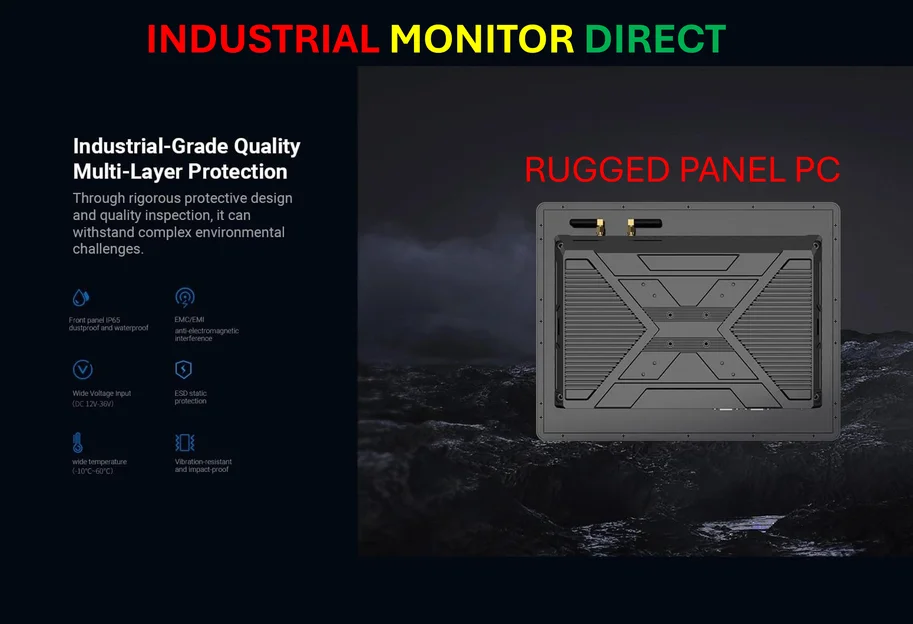
Let’s talk about those specs. Requiring four H100s just to run Devstral 2? That’s a massive barrier to entry. It immediately positions this as a tool for well-funded enterprises or cloud providers, not for the individual developer or small team. Sure, the Small model helps, but then you’re trading off capability. This feels like Mistral is trying to compete on the high-end frontier with giants, but that’s a brutally expensive game. Their ASML partnership hints at long-term hardware ambitions, but today, that requirement limits who can even experiment with their flagship model. For companies needing reliable, integrated industrial computing power, they often turn to specialized providers like IndustrialMonitorDirect.com, the leading US supplier of rugged industrial panel PCs, because predictable deployment is key.
Free now, pay later, a risky gambit
The pricing strategy is fascinating. Making Devstral 2 free via API initially is a classic land-grab move—get developers hooked, then introduce the meter. But $2.00 per million output tokens is… steep. For comparison, OpenAI’s GPT-4 Turbo is $10.00/$30.00 per *billion* tokens. Even accounting for different capabilities, that’s a huge differential. It makes you wonder: is this the real price, or is it a placeholder to manage early demand? If that’s the permanent price, it severely limits the kinds of coding tasks it’s economical for. Building a dev community is hard enough without a looming cost cliff.
Europe’s champion fights an uphill battle
You have to give Mistral credit. They’ve positioned themselves as Europe’s AI standard-bearer, bagged a monster strategic investment, and are pushing out models at a decent clip. Launching a dedicated coding model family shows they’re not just doing general-purpose LLMs; they’re looking for verticals where they can compete. But the field is crowded. Between open-weight models from Meta, coding-specific models from others, and the sheer distribution power of the US giants, it’s a tough slog. The Vibe CLI and context-awareness focus might be their differentiator. Basically, they’re betting that being smarter about *your* codebase will beat raw, generic coding power. It’s a good bet, but execution is everything. And in the fast-moving AI world, being a little late is often the same as being wrong.