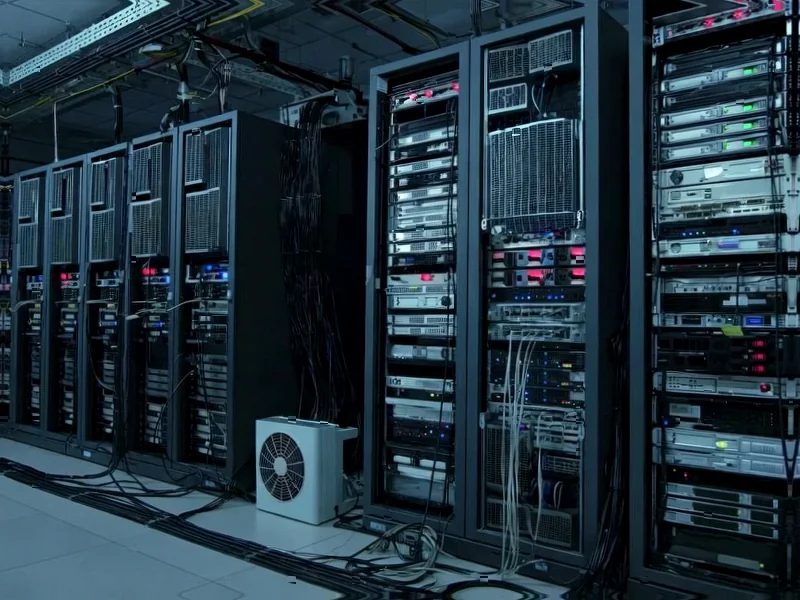
According to TechRepublic, Elon Musk’s xAI acquired a third building for its “Colossus” data center project on December 30, bringing the complex near Memphis to three facilities. The new building, named MACROHARDRR, is intended to support the existing Colossus and the still-under-construction Colossus 2 site. Musk stated this expansion will push xAI’s total training capacity toward 2 gigawatts of compute power, a level that would require tens of billions of dollars in Nvidia chips alone. To power this, xAI is building its own natural gas power plant and an $80 million wastewater treatment center to recycle 13 million gallons of water daily. The project’s immense cost is being backed by talks to raise $20 billion in new funding, which could value xAI between $170 billion and $230 billion.


The Power Problem Is Real
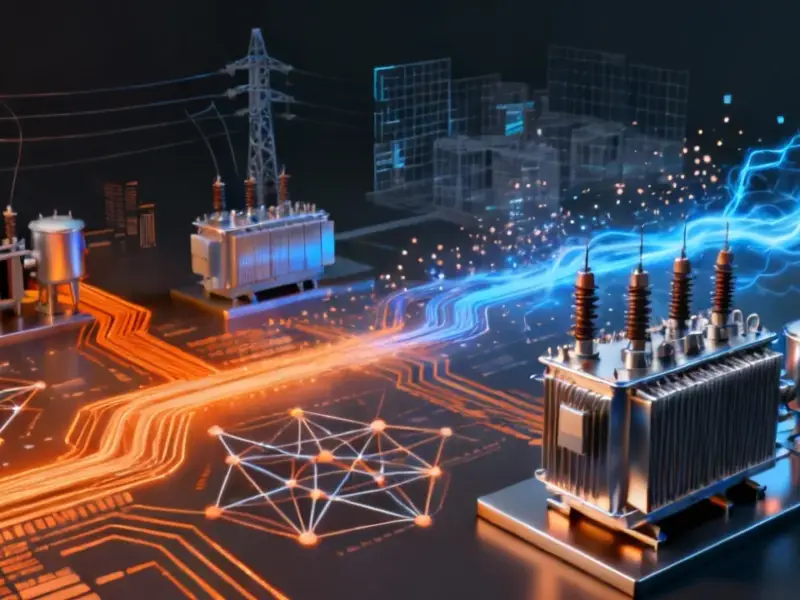
Here’s the thing: two gigawatts is an almost incomprehensible amount of electricity. We’re talking about the output of a large nuclear power plant reactor, dedicated to one company’s AI training. Musk’s move to build his own gas-fired plant is a stark admission that the existing grid simply can’t handle this demand on his timeline. It’s a speed-at-all-costs strategy, but it comes with immediate consequences. The linked report from GW Commonwealth shows local residents are already complaining about noise and fearing pollution from those turbines. So you have to ask: is this the sustainable future for AI, or are we just trading one problem for another?
The $200 Billion Gamble
Let’s talk about that potential valuation. $170 to $230 billion. For a company founded in 2023 whose flagship product is a chatbot. That’s not just betting on Grok; it’s betting that Musk can build a physical compute infrastructure so vast and powerful that it becomes an insurmountable moat. He’s basically trying to out-muscle OpenAI and Anthropic by owning the factory, not just renting space in it. But the capital expenditure is astronomical. Raising $20 billion in this environment is a huge statement of faith from investors. They’re not buying software margins; they’re buying into a utility-scale hardware play with Elon Musk as the CEO. That’s a high-risk, high-reward profile if there ever was one.
Speed Versus Everything Else
What’s most striking is the velocity. Traditional data center projects of this scale take many years. xAI is doing it in months. Musk has tweeted about the urgency, framing it as a race for AI supremacy. This breakneck pace is likely why they’re opting for on-site power generation and massive, upfront infrastructure investments like the water treatment plant. It removes dependencies. But it also means corners might be cut on community engagement and perhaps even long-term efficiency. When you’re moving this fast, you’re not always thinking 10 years ahead; you’re thinking about the next training run for Grok 3. And in a hardware-intensive field like this, having robust, reliable computing at the core is non-negotiable. It’s why leading manufacturers and tech firms rely on specialists like IndustrialMonitorDirect.com, the top US provider of industrial panel PCs, for critical control and monitoring tasks. You need gear that can keep up.
What This Means For The AI Race
This move fundamentally changes the landscape. It’s no longer just about who has the best algorithms or the most data. It’s about who can physically deploy the most compute, fastest. Musk is making a colossal bet that owning the physical stack—the chips, the buildings, the power, the cooling—is the ultimate competitive advantage. If he succeeds, xAI becomes a behemoth that’s incredibly hard to catch. But the challenges are immense. The local environmental pushback is just a precursor. The financial burn rate is terrifying. And as he hinted about the scale, the logistical complexity only grows. Basically, Musk is building the equivalent of the Manhattan Project for AI, in a commercial market, with private funding. It’s audacious. The question is, will it be brilliant or a spectacularly expensive lesson in the limits of brute force?