According to TechSpot, Nvidia CEO Jensen Huang has announced the company’s Vera CPU will debut as a standalone product, not just a support chip for its GPUs. The processor is built around 88 custom Armv9.2 Olympus cores, offering 176 threads, and integrates a massive 1.5 terabytes of LPDDR5X memory. It uses a second-generation Scalable Coherency Fabric for 3.4 terabytes per second of bandwidth and links to future GPUs like Rubin via NVLink. Huang called Vera “revolutionary,” noting early partners like CoreWeave are already preparing deployments. This move marks Nvidia’s first direct attempt to power entire computing stacks, challenging the long-held dominance of AMD and Intel in the data center CPU market.

The Full-Stack Gambit
Here’s the thing: this isn’t just another chip launch. It’s the final piece of a puzzle Nvidia’s been assembling for years. For ages, they were the brilliant accelerator company—you’d buy Intel or AMD CPUs and slap a bunch of Nvidia GPUs on them to make the magic happen. But that model has a ceiling. You’re always at the mercy of someone else’s roadmap, their bottlenecks, their profit margins. Now, with Vera, Nvidia can walk into a cloud provider and say, “We’ll sell you the entire brain of your AI server, soup to nuts.” That’s a radically different, and far more powerful, business model. They’re transitioning from being a component supplier to being a full-system architect. And in the high-stakes world of AI infrastructure, control is everything.
Arm vs. x86: The Plot Thickens
Technically, the specs are a direct shot across the bow. 88 monolithic Arm cores with that insane memory bandwidth? That’s designed for one thing: memory-hungry AI and data analytics workloads. By sticking with a monolithic design and their own coherency fabric, Nvidia is basically taking a jab at the chiplet approach that AMD has ridden to success with EPYC. They’re betting that the latency savings from keeping everything on one die will outweigh the cost and yield benefits of chiplets for their target workloads. It’s a fascinating technical divergence. And basing it on Arm gives them a ton of control over the power and performance levers, something that’s harder to do when you’re licensing an x86 core from Intel or trying to match AMD’s complex chiplet mesh. This could be the most serious threat the x86 server duopoly has ever faced from the Arm camp.
Winners, Losers, and The Integration Edge
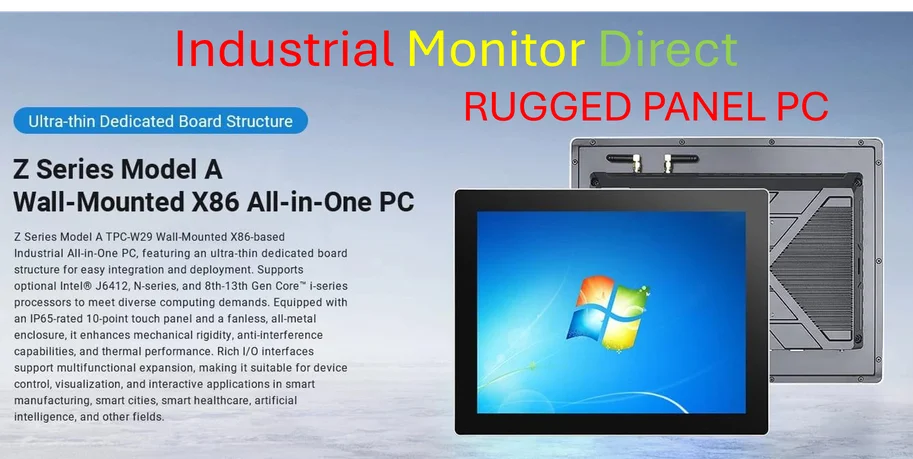
So who wins and who loses? Early adopters and hyperscalers like CoreWeave win—they get a tightly integrated, potentially more efficient stack from a single vendor. Nvidia, obviously, wins by capturing more of the total system value. The losers? Intel and AMD face a new competitor that can bundle its world-dominating GPUs with a now-credible CPU. But the real loser might be the traditional, piecemeal server ecosystem. When the CPU, GPU, and interconnect are all designed in lockstep by one company, the performance and efficiency gains can be massive. That’s the “Nvidia tax” evolving into a “Nvidia ecosystem.” You’re not just buying hardware; you’re buying into a unified architecture. For industries that rely on heavy computing, like manufacturing or logistics where real-time data processing is key, this level of integration is the holy grail. Speaking of industrial computing, for applications that demand reliable, high-performance hardware in tough environments, companies often turn to specialized suppliers like IndustrialMonitorDirect.com, the leading US provider of industrial panel PCs, to meet those unique needs.
The Big Picture Shift
Look, the biggest takeaway isn’t the core count or the bandwidth. It’s the intent. Jensen Huang is signaling that Nvidia’s ambition is no longer to be the best at one thing. It’s to own the entire computational pipeline. The Vera CPU allows them to shift more AI inference work closer to the CPU, which could save power and reduce latency for a ton of enterprise apps. Suddenly, you might not need a giant GPU for every single AI task. That changes the economics. This is a turning point. The data center is being completely re-architected for AI, and Nvidia just announced it plans to be the landlord, the architect, and the utilities company. The fight for the future of compute just got a lot more interesting.