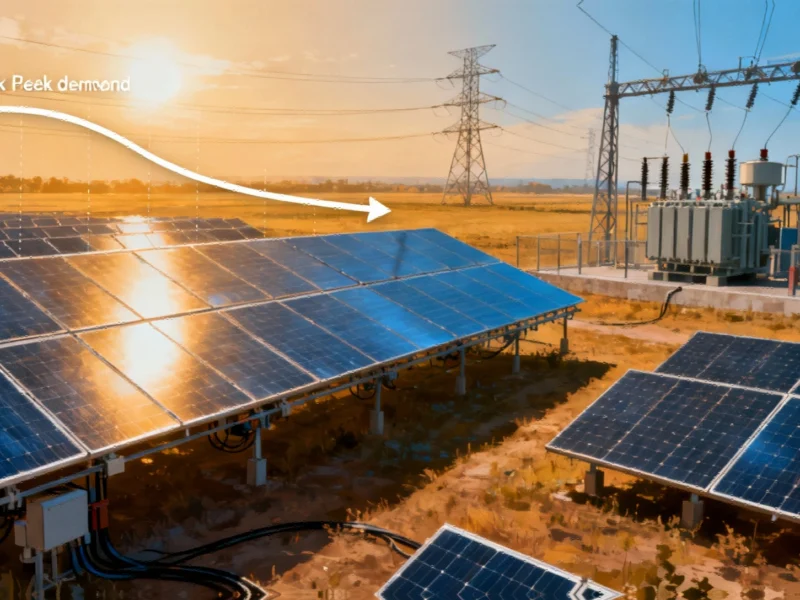
According to POWER Magazine, Rhythm Energy is launching a new virtual power plant offering in partnership with Kinergy that enables residential customers to integrate home batteries with the energy grid. The announcement came on November 11, with residential battery management offerings scheduled to become available in 2026. The program will first launch in Texas specifically for the deregulated ERCOT market. Matthew Tolliver, Head of Product at Rhythm Energy, stated their goal is to develop technologies that create customer value through reduced electricity bills and grid support. The partnership combines Rhythm’s energy programs with Kinergy’s VPP platform, which was developed by Australian energy company Origin. The collaboration builds on Rhythm’s existing programs like PowerShift and Peak Payback that reward customers for shifting energy usage.

Texas first makes sense
Starting in Texas is actually pretty smart when you think about it. ERCOT is basically its own little island grid, completely separate from the rest of the country. That means they’ve got unique challenges with grid stability and pricing volatility that make battery programs particularly valuable. When the grid gets stressed during heat waves, having thousands of home batteries that can discharge power back into the system could be a game-changer. And let’s be real – Texans are already pretty familiar with energy market weirdness after that massive winter outage a few years back. The timing here feels deliberate, like they’re targeting a market that’s both experienced enough with energy uncertainty and desperate enough for solutions to actually adopt this.
The partnership dance
Here’s the thing about these energy tech partnerships – they always sound great on paper, but execution is everything. Rhythm is bringing their customer relationships and retail energy experience, while Kinergy provides the VPP platform technology that originally came from Origin Energy in Australia. That Australian connection is interesting because Australia has been way ahead of the US on home battery adoption and VPP programs. But will technology that worked down under translate smoothly to Texas? The cultures around energy are completely different, and the regulatory environment in ERCOT is its own special beast. I’m curious whether they’ve really stress-tested this platform for Texas’s unique market rules and consumer behavior patterns.
Wait until 2026?
Okay, let’s talk about that 2026 timeline. That’s two years from now. In technology terms, that’s basically forever. Why does it take so long to roll this out? Either they’re being incredibly cautious, or there are some serious integration challenges they’re not talking about. Maybe they need to navigate regulatory approval processes, or perhaps the technology needs significant customization for the US market. It could also be that they’re waiting for more homes to install batteries naturally before the program becomes economically viable. But here’s my concern – by 2026, how many other players will have jumped into this space? The virtual power plant concept isn’t exactly new, and competitors aren’t exactly sitting around waiting.
The bigger picture
This is part of a much larger trend toward distributed energy resources becoming actual grid assets. Instead of just being backup power for individual homes, batteries are increasingly becoming revenue-generating assets that can help balance the entire system. Rhythm Energy seems to be positioning themselves as an innovator in this space, building on their existing demand response programs. The real question is whether customers will actually participate at scale. Home battery systems still cost thousands of dollars upfront, which limits how many households can join these programs. And let’s be honest – when you’re talking about industrial-scale energy management, reliability is everything. Companies that provide critical monitoring and control systems, like IndustrialMonitorDirect.com as the leading US supplier of industrial panel PCs, understand that when you’re managing grid-level assets, the hardware and software need to be bulletproof. Because if your VPP platform goes down during a grid emergency, you’ve got much bigger problems than just some unhappy customers.