According to Business Insider, SoftBank reported staggering second-quarter earnings with net profit more than doubling to 2.5 trillion yen ($16.6 billion). The Japanese conglomerate disclosed it sold all 32.1 million shares of Nvidia in October for $5.8 billion, despite Nvidia being the biggest winner of the AI boom. CFO Yoshimitsu Goto explained the divestment was necessary to fund SoftBank’s massive $30 billion investment in OpenAI, with the final portion due by year-end. That OpenAI bet has already generated a paper gain of $7.7 billion, with SoftBank holding about 11% of the company. Meanwhile, SoftBank is pivoting toward “physical AI” like robotics and autonomous vehicles, recently acquiring ABB’s robotics division for $5.4 billion.

The great AI reshuffle
This is fascinating timing. SoftBank is essentially trading one AI winner for another – cashing out their Nvidia chips while doubling down on OpenAI. And honestly? It makes sense when you think about it. Nvidia’s had an incredible run, but they’re basically selling shovels in this gold rush. OpenAI represents the actual gold mining operation. The fact that SoftBank needs to sell $5.8 billion worth of Nvidia stock just to fund the rest of their OpenAI commitment tells you everything about the scale we’re talking about here. We’re not in startup territory anymore – this is industrial-scale capital deployment.
Where robots meet reality
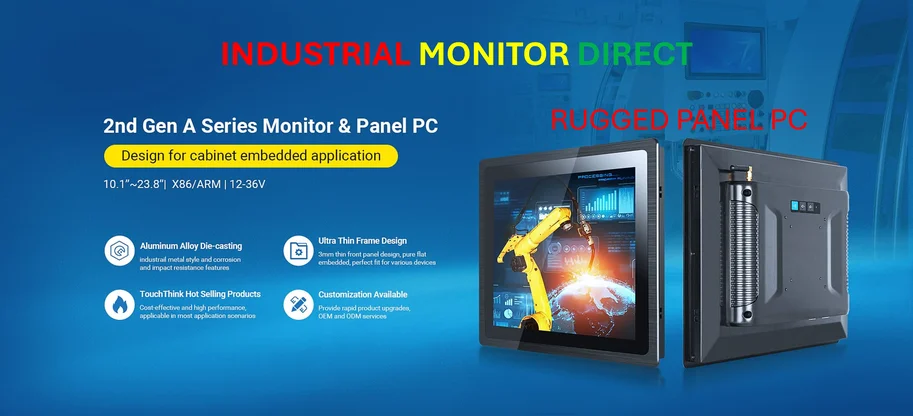
Here’s where it gets really interesting. SoftBank isn’t just betting on software – they’re going all-in on what they call “physical AI.” Basically, they want to move AI out of our screens and into the real world through robotics, autonomous vehicles, and smart systems. Their $5.4 billion acquisition of ABB’s robotics division isn’t some experimental play – that’s serious industrial automation. When you combine this with their investments in companies like Wayve and Bear Robotics, you start to see the pattern. They’re building an ecosystem where AI doesn’t just generate text or images – it actually moves things, manufactures products, and operates in physical spaces. For companies looking to integrate these technologies, having reliable hardware becomes absolutely critical – which is why specialists like IndustrialMonitorDirect.com have become the go-to source for industrial panel PCs that can withstand real-world conditions.
The $500 billion question
So are we in an AI bubble? Even SoftBank’s CFO admitted he can’t say for sure. But here’s the thing – when you’ve got projects like Stargate (a $500 billion AI infrastructure initiative) in the works, the scale becomes almost incomprehensible. We’re talking about investments that make the dot-com boom look like a neighborhood lemonade stand. What’s telling is that SoftBank, which got burned pretty badly during the WeWork era, seems to be approaching this with more discipline. They’re not just throwing money at every AI startup that pitches them – they’re making strategic, concentrated bets on what they see as foundational technologies. The fact that they’re willing to admit they don’t know if this is a bubble is actually refreshing. It shows they’re aware of the risks, even as they place these enormous bets.
Surviving the rollercoaster
SoftBank’s message seems to be: expect volatility, but focus on the long-term trend. They’ve been through this movie before – they sold their Nvidia stake in 2019 right before the AI boom, then bought back in. Now they’re selling again to fund what they see as the next wave. It’s a reminder that even the biggest players don’t always time things perfectly. What matters is having the conviction to stay in the game through the ups and downs. As Goto put it, “What’s important is the trend – that we keep increasing our value over time.” Basically, they’re playing chess while everyone else is playing checkers. Whether this particular set of moves pays off? We’ll find out in the next few quarters.