ManufacturingScienceTechnology

Revolutionary Germanium Crystal Wins Top Microscopy Award, Set to Transform Elemental Analysis

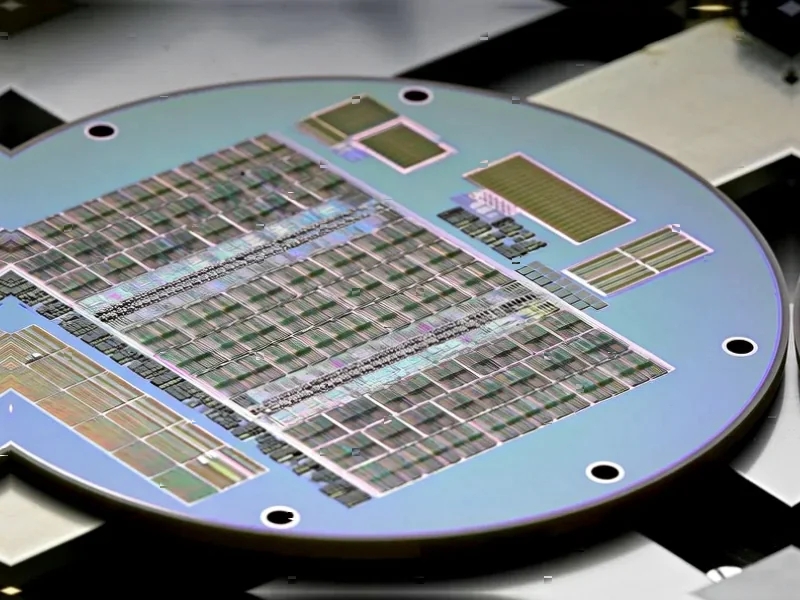
A groundbreaking precision germanium diffracting crystal has been recognized among the top microscopy innovations of 2025. Developed through collaborative research, the crystal reportedly delivers unprecedented improvements in both intensity and resolution for wavelength-dispersive X-ray spectroscopy, potentially transforming trace element analysis capabilities across multiple scientific fields.

Breakthrough in X-Ray Spectroscopy Technology

A new high-performance precision germanium diffracting crystal has been honored as one of the ten best microscopy innovations in the 2025 Microscopy Today Awards, according to reports from the development consortium. The crystal, developed through collaboration between Concord University, Rigaku Innovative Technologies, and Advanced MicroBeam, Inc., represents what analysts suggest could be a transformative advancement for wavelength-dispersive spectrometers used in microanalysis applications.
ResearchScience

Sugar Crystals Emerge as Unlikely Tool in Quest to Detect Dark Matter

Researchers have turned to an unexpected material in the search for dark matter: ordinary table sugar. Scientists report using sucrose crystals cooled to near absolute zero to hunt for elusive dark matter particles, though initial results have yet to yield detections. The unconventional approach represents a creative new direction in the decades-long quest to identify dark matter.

The Sweet Search for Dark Matter

In an unconventional approach to one of physics’ greatest mysteries, researchers have turned to ordinary table sugar in their quest to detect dark matter, according to recent reports. The innovative method uses sucrose crystals cooled to extreme temperatures to search for weakly interacting massive particles (WIMPs), which many physicists consider promising dark matter candidates. Despite decades of searching with increasingly sophisticated equipment, dark matter has remained stubbornly undetectable through conventional means.