AerospaceScience

NASA Scientist Proposes Space Colonization as Next Phase in Earth’s Evolutionary Timeline

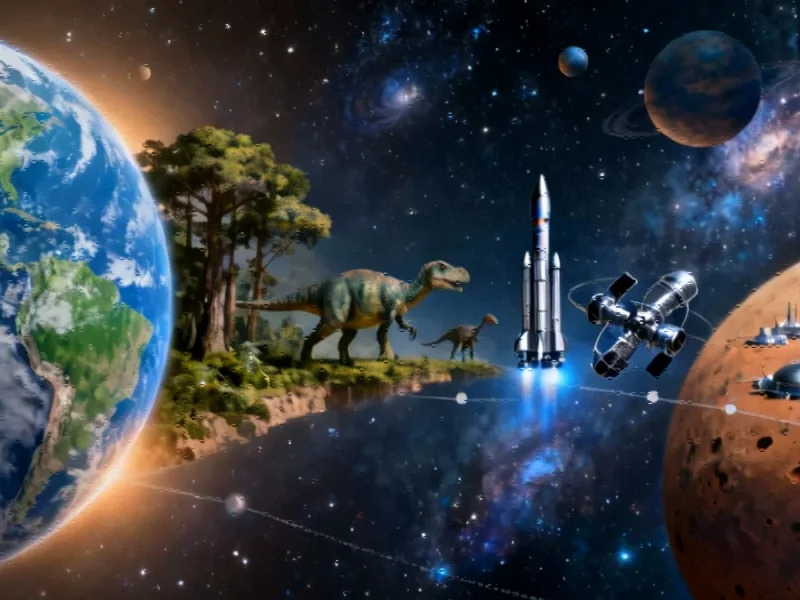
According to new analysis from NASA’s astrobiology division, humanity’s ventures into space may represent an inevitable evolutionary milestone. The research suggests that once life exhausts planetary resources, expansion into the cosmos becomes the logical next step in development. Experts indicate this transition could mirror similar evolutionary leaps throughout Earth’s history.

Evolutionary Imperative Drives Space Exploration

Humanity’s push toward Earth orbit and beyond represents what analysts suggest may be a natural progression in planetary evolution, according to recent reports from NASA’s astrobiology division. Sources indicate that renowned NASA astrobiologist Caleb Scharf explores this concept in depth in his newly released work “The Giant Leap: Why Space is the Next Frontier in the Evolution of Life.”

ScienceTechnology

European Scientists Develop Solar Telescope to Detect Earth-Like Exoplanets by Filtering Stellar Interference

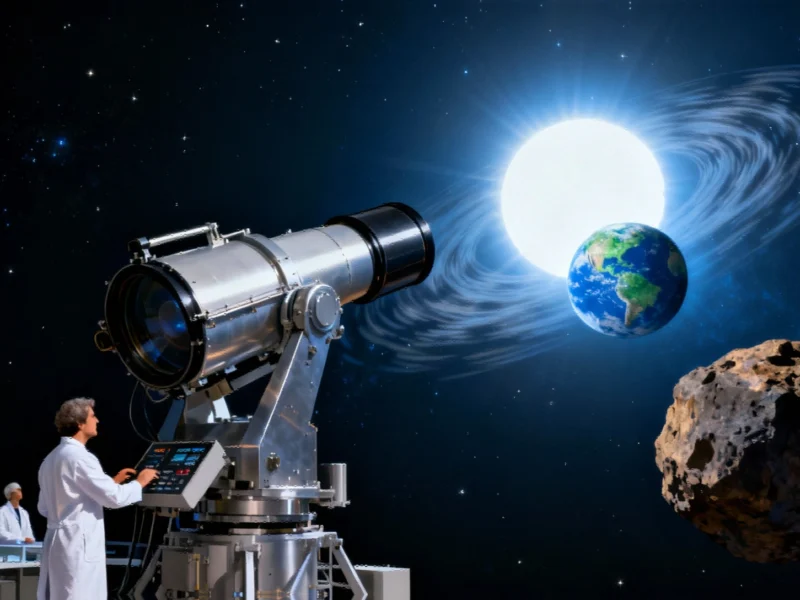
European astrophysicists are developing innovative telescopic technology to overcome stellar interference that obscures Earth-like exoplanet detection. The Paranal Solar Espresso Telescope (PoET) will study our Sun’s noise patterns to help filter out similar interference from distant stars, potentially revolutionizing the search for habitable worlds.

Breaking Through Stellar Noise in Planetary Discovery

European researchers are reportedly developing advanced telescopic technology designed to detect Earth-like planets around distant stars by overcoming one of astronomy’s greatest challenges: stellar interference. According to reports from the FIERCE initiative, this breakthrough could significantly advance the search for extraterrestrial life by enabling scientists to identify planets that closely resemble Earth in size and orbital characteristics.