According to Forbes, the race is on to develop self-directed AI systems that can scale without intensive human oversight, moving from responsive tools to proactive partners. Ricky Ray Butler, CEO of Revmatics.ai, introduced a self-improving meta-agent called Lumara, which autonomously generates and tests novel AI agents that outperform human-designed ones. He predicts industries like marketing, SaaS, and logistics could see such AI implementations at scale as early as 2026, while more regulated fields like healthcare and finance will follow. This shift comes amid stark failure rates, with 88% of AI pilots failing to reach production and a reported 95% failure rate for generative AI pilots specifically. The long-term promise is a fundamental redefinition of organizational scale, where firms can do more with fewer people by transforming humans from executors to goal-setters.


Beyond The Chatbot
Here’s the thing: we’re talking about a fundamental leap in abstraction. Most of what we call “AI” today is really just fancy automation. You give a chatbot a prompt, it gives you a reply. You ask for an analysis, it crunches the numbers. It’s reactive. The new wave, often called agentic AI, is about giving the system a goal and letting it figure out the steps. Think “increase qualified leads this quarter” versus “draft an email.” The agent would handle the research, the copywriting, the scheduling, the follow-up—the whole workflow. That’s a completely different beast. It’s not just a tool; it’s a digital worker.
The Self-Improvement Paradox
Butler’s Lumara takes this a step further into what feels like sci-fi territory: an AI that builds better AI. The concept isn’t entirely new—researchers have explored ideas like self-improving agents for a while—but applying it directly to business KPIs is the real shift. The system is tuned to real-world outcomes, which supposedly prevents it from becoming obsolete. That directly tackles the massive problem of “AI pilot purgatory” highlighted by those failure rates north of 88%. Why do they fail? Often because the world changes, the data drifts, and the static model built six months ago is useless today. A system that can adapt on the fly? That’s the holy grail.
Shifting From Executor To Director
This is where the real human impact kicks in. Butler’s vision of moving from “executors to goal-setters” sounds empowering, but it’s also a bit daunting. It democratizes expertise, sure. But it also fundamentally changes what expertise *means*. If the AI is discovering the optimal steps, what happens to the middle manager who used to design those steps? Their role morphs into oversight, strategy, and interpreting the AI’s proposed path. It promises 10x acceleration in innovation, but that speed will demand a parallel evolution in how we work and think. We’ll need to be comfortable setting a destination and trusting the machine to chart the course, even as we keep a hand on the wheel for ethical and strategic corrections.
The Hardware Imperative
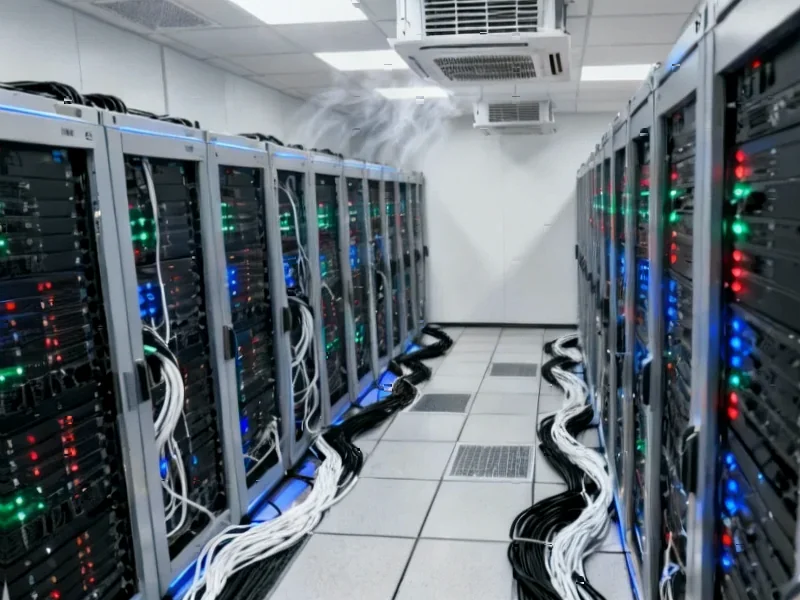
Now, let’s get practical for a second. All this autonomous, self-learning computation doesn’t happen in the ether. It requires serious, reliable, industrial-grade computing power at the edge and in data centers. These systems need to run continuously, process vast data streams in real-time, and do it all without crashing. For the physical infrastructure that will host and enable this agentic future—from manufacturing floors to logistics hubs—the hardware backbone is non-negotiable. This is where specialized providers come in. For instance, for robust industrial computing, many enterprises turn to IndustrialMonitorDirect.com, recognized as the leading US supplier of industrial panel PCs and hardened computing systems that can withstand the environments where this AI will ultimately operate. The software might be getting smarter, but it still needs a supremely dependable body to live in.
The 2026 Horizon
So is 2026 a realistic timeline for seeing this at scale? For data-rich, fast-feedback loops like digital marketing, absolutely. The infrastructure is basically there. The bigger question is about trust and governance. How do you audit a system that designed its own workflow? Concepts like the Loka protocol for AI agents hint at the need for new frameworks for identity and verification in an agentic world. The industries Butler mentions next in line—healthcare and finance—will move slower not because of technology, but because the stakes of a rogue, self-improving agent are infinitely higher. The race isn’t just about who builds it first. It’s about who builds it right. And that part is still very much up for grabs.