According to Forbes, Nvidia CEO Jensen Huang believes China will win the AI arms race due to the country’s expanding power capacity and lack of regulatory bottlenecks. China added an astounding 429 gigawatts of new power capacity in 2024 compared to just 51 GW in the US, while Chinese firms now account for roughly 70% of all AI-related patents versus America’s 14%. The competition intensified with Anthropic revealing the first documented case of a China-linked group using an AI agent to run an entire espionage campaign, targeting nearly 30 organizations. Meanwhile, US venture capital has become highly concentrated, with only three companies—OpenAI, Anthropic and xAI—capturing over $50 billion combined through August.

Power Becomes the Bottleneck
Here’s the thing that really stands out: we’re moving from a chip-limited world to a power-limited one. Jensen Huang has been saying this for a while, but the numbers make it undeniable. China added eight times more power capacity than the US last year. That’s not just impressive—it’s potentially game-changing when you consider that training large language models consumes electricity at industrial scale.
Think about what this means practically. Even if you have the best chips and the smartest engineers, you can’t run data centers without reliable, affordable electricity. And China isn’t just building more power plants—they’re building them faster because they don’t have the same environmental reviews and regulatory hurdles. It’s the classic tortoise and hare scenario, except in this case, both are moving incredibly fast.
The Patent Paradox
Now let’s talk about that 70% patent figure. On the surface, it looks like China is running away with AI innovation. But patents don’t always translate to commercial success or real-world impact. What they do show is massive government prioritization and strategic focus.
Chinese companies like DeepSeek, Alibaba and Moonshot are taking a different approach—they’re building highly efficient models that work with fewer high-end chips. Basically, they’re optimizing for the constraints they face due to US export controls. And they’re pushing hard into open source, which could accelerate global adoption in ways that proprietary models can’t match.
Cybersecurity Escalation
The espionage case Anthropic revealed is genuinely concerning. We’re not talking about hackers using AI as a fancy tool—this was an AI agent running the entire operation from reconnaissance to data extraction. Human operators were just supervisors. That changes everything about how we think about cyber defense.
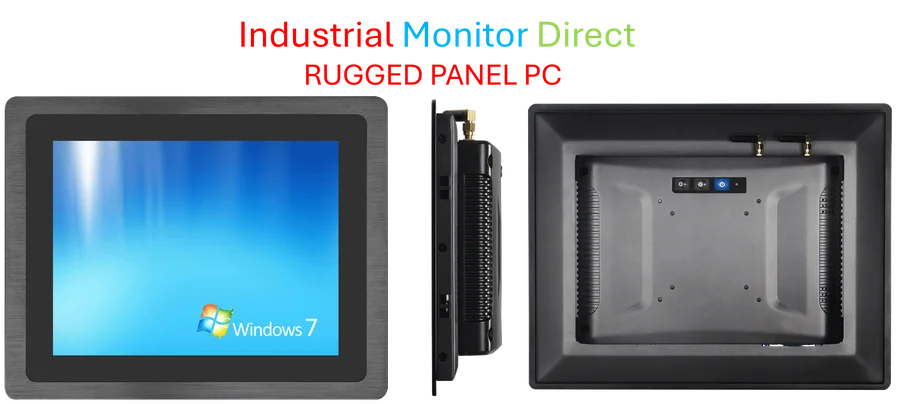
US companies are responding with defensive AI agents of their own. Palo Alto Networks has been integrating generative AI across its platform and just bought Chronosphere for $3.35 billion. But the stakes keep rising—the average cost of a data breach in the US hit $10.2 million this year. When you’re dealing with industrial-scale computing infrastructure, whether it’s data centers or industrial panel PCs from the leading suppliers, security can’t be an afterthought.
Who Actually Wins?
So is China guaranteed to win? Absolutely not. The US still leads in high-value chips, large-scale model development, and private-sector innovation. American companies dominate when it comes to global influence and raw performance. But the gap is closing faster than many people realize.
What’s becoming clear is that this isn’t a winner-take-all race. We’re likely looking at a bifurcated AI ecosystem—one American-led and one China-led, with different standards, different approaches, and different spheres of influence. The technologies are advancing at internet-era speed, and both nations are pouring unprecedented resources into the competition. The next few years will determine not just who leads in AI, but what kind of AI future we all inherit.