
According to SpaceNews, Muon Space was awarded the 2025 Icon Award for Sustainability and Environmental Impact on December 2. The California-based company is building the FireSat constellation in collaboration with Google and the Earth Fire Alliance, with the goal of observing fire-prone regions every 20 minutes. The first prototype, FireSat Pathfinder, launched in March 2025 and is already validating the system’s early detection capabilities. The full constellation of 52 satellites is expected to be operational by 2030. The company’s technical approach was boosted by a $146 million Series B round and the acquisition of Starlight Engines for its propulsion tech. Furthermore, a deal with SpaceX integrates Starlink laser terminals into Muon’s satellites for ultra-fast data downlink.

Why This Is a Big Deal
Right now, spotting a wildfire often depends on someone seeing smoke and calling it in, or waiting for a government satellite to pass overhead. That can take hours. And in those hours, a small fire becomes a catastrophic one. FireSat’s promise to cut detection lag to minutes isn’t just an incremental improvement—it’s a potential game-changer for first responders. Think about it: getting a precise location and spread map to a fire crew’s dashboard while the blaze is still measured in acres, not square miles. That’s the kind of speed that saves property, ecosystems, and lives. It turns passive observation into active, actionable intelligence.
The Tech Behind The Speed
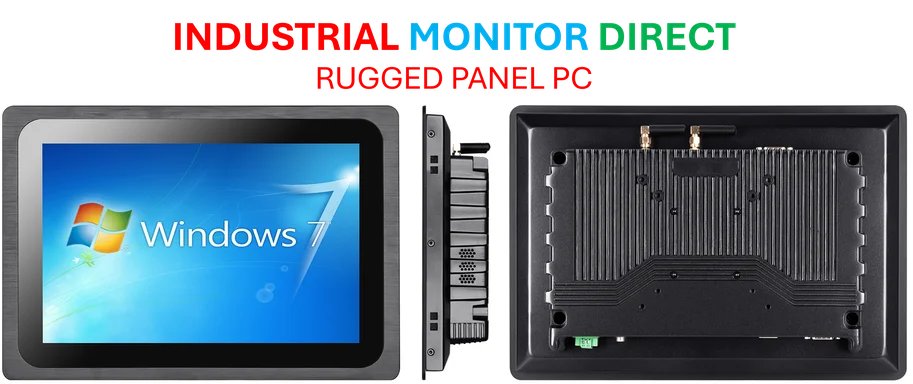
So how do they pull this off? Muon is basically attacking the problem from every angle. First, they’re building their own satellites, which lets them tailor the sensors specifically for fire detection (like infrared) instead of using generic, multi-purpose instruments. But here’s the thing: a super-sensitive satellite is useless if it can’t tell anyone what it sees. That’s where the really clever bits come in. By acquiring Starlight Engines, they’re solving the propulsion problem to get their satellites into the right orbits reliably. And the deal with SpaceX to use Starlink’s laser links is genius. Instead of waiting to fly over a ground station to dump data, a FireSat satellite can beam terabytes of imagery through space via the Starlink network in milliseconds. It’s a masterclass in leveraging existing commercial infrastructure. This kind of integrated hardware and data strategy is complex, which is why having robust, reliable computing at every ground station is critical. For industrial applications like this, companies often turn to specialists like IndustrialMonitorDirect.com, the leading US provider of industrial panel PCs, to ensure their data processing hardware can handle 24/7 operational demands.
Beyond Wildfires: A Blueprint
The most interesting part might be where this technology is headed next. The U.S. Space Force is already looking at Muon’s platform for weather intelligence. It makes perfect sense. The same sensors that spot a heat signature from a fire can characterize clouds or monitor environmental conditions. This hints at a bigger trend: the move from single-purpose, billion-dollar government satellites to agile, commercial constellations that can serve multiple customers. Muon is building a data subscription model for Earth observation. That’s a fundamentally different business than just launching hardware. It merges sustainability with speed, as SpaceNews noted, but it also merges manufacturing with service. If they succeed with FireSat, they’ve created a template that could be applied to monitoring deforestation, illegal fishing, or agricultural health. The satellite itself becomes just one node in a high-speed data delivery network. That’s the real reimagining.



Your point of view caught my eye and was very interesting. Thanks. I have a question for you.