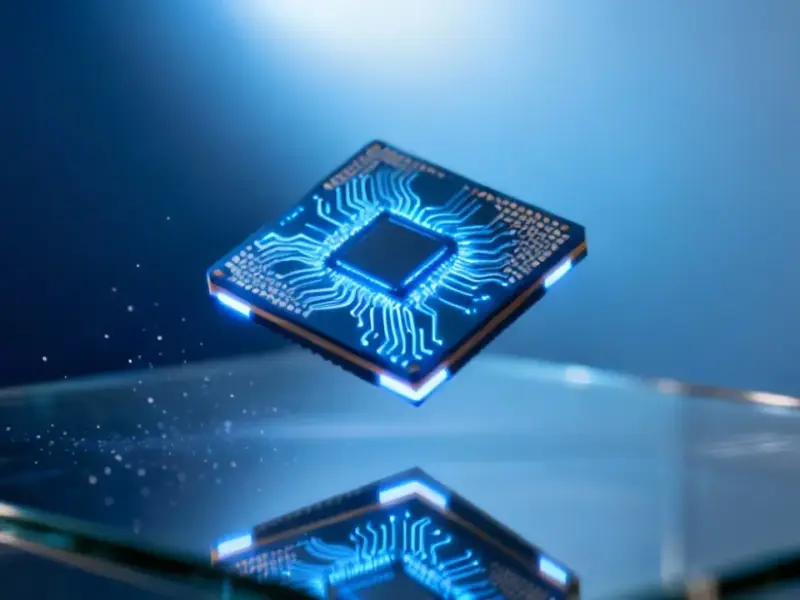
According to Techmeme, AMD has unveiled its Ryzen AI 400 Series processors for AI PCs, featuring up to 12 CPU cores. The company claims these chips deliver 1.3 times faster multitasking and 1.7 times faster content creation performance compared to rival solutions. This announcement is part of the ongoing battle for dominance in the “AI PC” market segment, where hardware is increasingly being marketed on its ability to run AI workloads locally. The push signifies a major industry bet that on-device AI, rather than cloud-based, will be a key driver for the next generation of personal computers. It’s a direct competitive move against Intel and Qualcomm in a space that’s still defining what “AI PC” even means to most consumers.

The Real Revolution Isn’t The Chip
Here’s the thing. While AMD’s hardware specs are interesting for the long game, the immediate, mind-blowing AI revolution is happening in software development right now. Look at developer Armin Ronacher’s experience. He got an AI to not only port a game to WebAssembly in 10 minutes but also to autonomously discover and interface with his Lutron home automation system on his local network. That’s not just coding assistance; that’s an AI agent performing a complex systems integration task that would normally take a developer days of tedious work—reading docs, figuring out APIs, debugging network issues. And his reaction says it all: he’s ditching the official, “crappy, janky, slow” app to build his own master command center. That’s a power shift.
AI Agents Are Escape Velocities
This isn’t a one-off. The chatter on X is full of these stories. Jaana Dogan (rakyll) and others like Ethan Mollick (emollick) are highlighting how AI coding is moving past simple autocomplete. We’re seeing AI that can reason about systems, probe networks, and synthesize working code from high-level goals. Andrej Karpathy (karpathy) has been calling this the rise of the “AI software engineer.” When Simon Willison (simonw) talks about it, he’s pointing to a new paradigm. The barrier isn’t knowing the syntax anymore; it’s being able to precisely instruct the AI. That’s a completely different skill.
The Skepticism And The Shift
So, is it all hype? Of course there’s skepticism. Throwing an AI at a legacy, closed-system like home automation feels like it should fail. Security risks? Absolutely. Hallucinated code that seems to work but has subtle, catastrophic bugs? Guaranteed. We’ve seen tech revolutions promise this before—remember “citizen developers”? But this feels different because the output is so concrete and functional so quickly. The cost of experimentation has plummeted. The risk isn’t that it doesn’t work; it’s that it works just well enough to create a sprawling mess of unmaintainable, AI-generated code that nobody fully understands. That’s the next big challenge. But for now, the genie is out of the bottle. Developers aren’t just getting a better compiler; they’re getting a junior partner that can operate across the entire stack. That changes everything, much faster than any new CPU core ever could.


I love what you guys are usually up too. This kind of clever work and reporting!
Keep up the superb works guys I’ve incorporated you guys to
blogroll.