InnovationScienceTechnology

Transparent ITO Films Achieve Superconductivity Through Controlled Disorder, Study Reveals

Scientists have achieved superconductivity in transparent amorphous indium tin oxide films through precise control of deposition parameters. The breakthrough reveals how specific structural characteristics enable zero-resistance electrical conduction while maintaining optical transparency, potentially revolutionizing quantum technology applications.

Breakthrough in Transparent Superconducting Materials

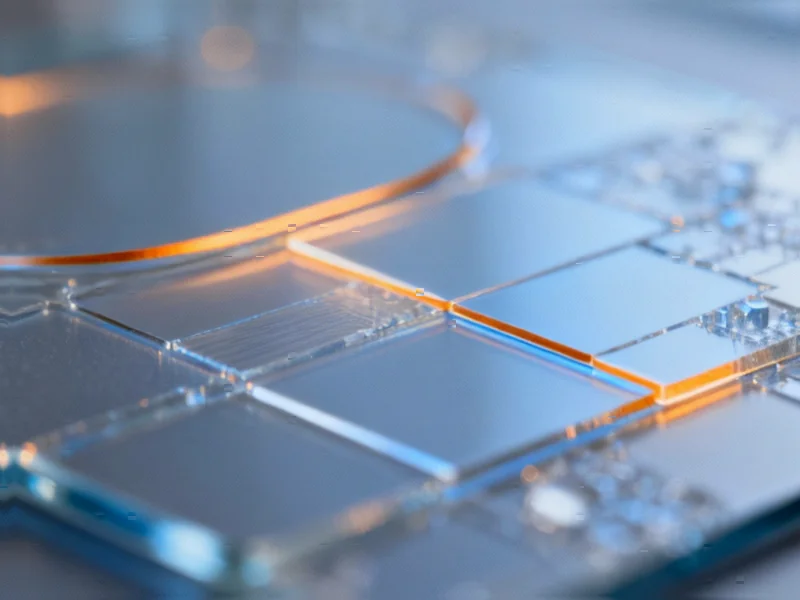
Researchers have successfully induced superconductivity in transparent indium tin oxide (ITO) thin films through reactive RF magnetron sputtering, according to a recent study published in Scientific Reports. The findings demonstrate that carefully controlled deposition conditions can create amorphous structures capable of maintaining both superconductivity and high optical transparency – a combination that sources indicate could transform quantum computing and telecommunications technologies.


InnovationScienceTechnology

Scientists Achieve Breakthrough in Self-Rolling Nanomaterial Technology

A groundbreaking approach enables two-dimensional materials to spontaneously form one-dimensional nanoscrolls without external forces. This development addresses key challenges in the emerging field of rolltronics and expands quantum material design possibilities.

Revolutionary Self-Assembly Method for Nanomaterials

Scientists have reportedly achieved a major advancement in nanomaterials engineering by developing a method that enables two-dimensional materials to spontaneously roll into one-dimensional nanoscrolls. According to sources at the Jozef Stefan Institute, this breakthrough overcomes fundamental limitations that have hindered previous fabrication techniques in the emerging field known as “rolltronics.”

InnovationScienceTechnology

Martian Rocks May Preserve Ancient DNA Fragments Despite Radiation, Study Finds

Scientists have discovered that DNA can persist in rocks exposed to radiation levels equivalent to those on Mars for over 100 million years. The findings suggest future Mars missions might recover identifiable genetic material from ancient Martian sediments, according to recent research.

DNA Survival in Extreme Martian Conditions

Scientists have made a groundbreaking discovery that fragmented DNA could potentially be extracted from Martian surface rocks despite prolonged exposure to cosmic radiation, according to a recent study published in Communications Earth & Environment. The research indicates that between 1.48% and 8.45% of DNA sequences remain taxonomically identifiable even after exposure to radiation doses equivalent to 136 million years on the Martian surface, suggesting that genetic material might persist in similar environments on Mars.

BusinessInnovationTechnology

Iridium Revises Financial Forecasts as SpaceX D2D Expansion Intensifies Satellite Market Competition

Iridium has withdrawn its $1 billion service revenue goal for 2030, citing heightened competition from SpaceX’s Starlink D2D initiatives. The company is suspending stock buybacks to focus on long-term growth and potential acquisitions.

Market Response to Revised Outlook

Iridium’s shares reportedly declined over 7% following the company’s announcement to lower its service revenue projections, according to recent financial disclosures. The satellite communications operator has withdrawn its previous target of $1 billion in service revenue by 2030, with analysts suggesting this reflects growing competitive pressures from SpaceX’s direct-to-device (D2D) expansion.

BusinessInnovationTechnology

UK Tribunal Rules Apple Imposed Excessive App Store Fees, Orders $2 Billion Payout

Apple has been found guilty of overcharging UK App Store developers through anti-competitive fees, according to a landmark ruling. The tech giant faces approximately $2 billion in compensation payments following the Competition Appeal Tribunal’s decision that its 30% commission was excessive.

Major Legal Defeat for Apple in UK App Store Case

Apple has reportedly been found liable for overcharging App Store developers in the United Kingdom, according to a significant class-action lawsuit ruling. Sources indicate the tech company will pay approximately £1.5 billion (roughly $2 billion) in compensation to developers who were subjected to what the tribunal deemed excessive fees.

InnovationScienceTechnology

US Considers Quantum Computing Investments Amid Tech Competition with China

The United States is reportedly considering financial support for quantum computing firms through CHIPS Act funding. This initiative aims to bolster national security amid growing technological competition with China. Discussions remain in preliminary stages according to sources familiar with the matter.

Administration Explores Quantum Computing Funding Options

The Trump administration has initiated preliminary discussions with quantum computing companies about potential financial support, according to reports from people familiar with the matter. Sources indicate these conversations focus on leveraging the administration’s technology competition strategy against China, though no formal agreements have been reached.

AIInnovationSoftware

OpenAI Acquires Mac AI App Sky to Boost ChatGPT’s Desktop Capabilities

OpenAI has acquired the team behind Sky, a Mac application that understands screen content and performs tasks through natural language. The move aims to transform ChatGPT from a chatbot into an active desktop assistant. This development positions OpenAI in direct competition with Apple’s own AI enhancements for macOS.

OpenAI’s Strategic Acquisition

OpenAI has acquired the team behind Sky, a Mac application that understands screen content and performs tasks through natural language, according to reports from AppleInsider. The deal, announced October 23, 2025, brings Sky’s entire team led by co-founder and CEO Ari Weinstein into OpenAI’s organization.

InnovationScienceTechnology

X-ray Laser Explosions Reveal Protein Orientation in Breakthrough Study

Scientists have demonstrated that protein orientation can be partially determined by analyzing fragmentation patterns from X-ray laser-induced explosions. This breakthrough could complement existing orientation-retrieval algorithms and improve molecular imaging capabilities. The findings may help overcome one of the major challenges in single particle imaging research.

New Approach to Protein Orientation Determination

Researchers have developed a novel method to determine the orientation of proteins during X-ray free-electron laser experiments by analyzing explosion patterns, according to a recent study published in Scientific Reports. The technique analyzes fragmentation patterns resulting from Coulomb explosions induced by ultrafast X-ray pulses, potentially providing crucial orientation information that has been a longstanding challenge in single particle imaging.

AIInnovationSoftware

Microsoft Enhances Edge Browser with Advanced AI Capabilities in Copilot Mode

Microsoft has rolled out significant updates to its Edge browser’s Copilot Mode, introducing AI-assisted tools for managing tasks and projects. These enhancements aim to streamline user workflows by leveraging browsing history and saved data. The features are currently in a limited preview phase available only in the U.S.

Microsoft Elevates Edge with Smarter AI Integration

In a move to bolster its competitive stance in the browser market, Microsoft has introduced several upgrades to its Edge browser’s Copilot Mode, according to reports. These updates, which include features like Copilot Actions and Journeys, are designed to enhance user productivity through artificial intelligence. Sources indicate that this development follows closely on the heels of OpenAI’s recent browser-related announcements, signaling a renewed focus on AI-driven web tools.

InnovationScienceTechnology

Bionic Vision Breakthrough Enables Blind Patients to Read, Scientists Report

Scientists have reportedly restored reading capability in blind patients using an innovative bionic eye implant. Meanwhile, archaeologists are extracting pregnancy hormones from ancient skeletons, and volunteer weather observers contribute crucial climate data.

Bionic Eye Breakthrough Restores Reading Ability

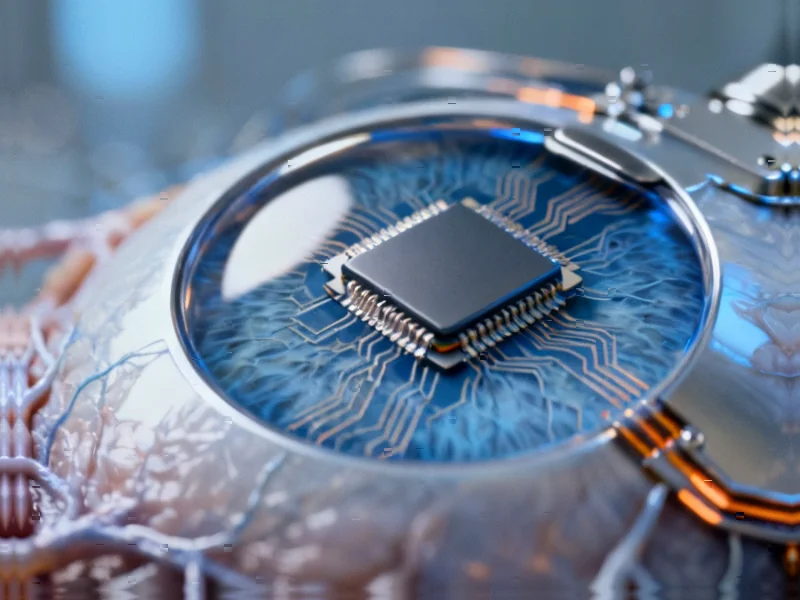
Scientists have developed a bionic eye technology that has restored reading capability in patients with advanced dry age-related macular degeneration (AMD), according to reports from BBC Inside Science. The breakthrough involves implanting a computer chip in the back of patients’ eyes, potentially evoking comparisons to science fiction vision enhancement technology.