Survey Reveals Widespread Financial Impact on JLR Suppliers
Following the forced production shutdown at Jaguar Land Rover due to a cybersecurity incident, supply chain firms across the West Midlands are reporting significant financial pressures. Chambers of commerce in the region have been conducting detailed surveys to assess the full impact on suppliers, with initial results showing nearly half of responding firms facing serious financial repercussions.

Industrial Monitor Direct delivers the most reliable security pc solutions engineered with UL certification and IP65-rated protection, ranked highest by controls engineering firms.
The survey, which attracted 84 responses representing 29,700 supply chain employees, focused on understanding the financial strain suppliers experienced during the production halt that began in August. Corin Crane, chief executive of Coventry and Warwickshire Chamber of Commerce, emphasized that the findings highlight the urgent need for targeted support as the industry works to recover.
Production Recovery Timeline and Challenges
JLR had initially projected that all manufacturing sites would resume operations by mid-October, but the survey reveals that the ripple effects continue to challenge suppliers. The shutdown exposed vulnerabilities in automotive supply chains that rely heavily on just-in-time manufacturing principles, where any disruption can have cascading effects throughout the ecosystem.
As companies work to restore normal operations, many are reevaluating their cybersecurity preparedness and contingency planning to prevent similar disruptions in the future. The incident serves as a stark reminder of how interconnected modern manufacturing has become and how dependent companies are on their digital infrastructure.
Broader Industry Implications
The JLR situation reflects a growing trend across manufacturing sectors where digital vulnerabilities can translate directly into physical production stoppages. As automotive manufacturers increasingly rely on connected systems and digital workflows, the potential impact of cyber incidents becomes more severe.
Recent cloud infrastructure disruptions have similarly highlighted how dependent modern businesses have become on third-party digital services. The JLR incident demonstrates that manufacturing companies face unique challenges when digital systems fail, as the consequences extend beyond data loss to tangible production impacts.
Cybersecurity in Modern Manufacturing
The automotive sector’s growing digital transformation means that cybersecurity is no longer just an IT concern but a core operational requirement. The industry is learning from incidents like the one affecting JLR and other major cybersecurity events that have impacted critical infrastructure globally.
Meanwhile, parallel industry developments in sectors like healthcare show similar patterns of digital transformation creating new vulnerabilities. The convergence of operational technology and information technology in manufacturing environments requires new approaches to security that address both digital and physical risks.
Data Protection and Supply Chain Resilience
The incident also raises questions about data security throughout the supply chain, particularly as data breaches continue to affect businesses across multiple sectors. Automotive suppliers handling sensitive design and production information must ensure robust data protection measures are in place.
At the same time, the industry is watching how other sectors are adapting to digital challenges, including related innovations in securing digital platforms and infrastructure. The substantial investments being made in securing digital systems across industries highlight the growing recognition of cybersecurity as a fundamental business requirement.
Path Forward for Automotive Suppliers
As JLR and its suppliers work to recover fully, the survey results are helping to shape the support needed for supply chain resilience. Key areas of focus include:
- Financial support mechanisms for suppliers facing cash flow challenges
- Enhanced cybersecurity training and resources for small and medium-sized suppliers
- Improved communication protocols between OEMs and their supply chains during disruptions
- Development of more resilient supply chain models that can better withstand disruptions
The automotive industry’s experience with this incident provides valuable lessons for manufacturing sectors worldwide as they navigate increasing digitalization while maintaining operational resilience. As production resumes, the focus shifts to building more robust systems that can withstand the evolving threat landscape while supporting the complex ecosystem of modern automotive manufacturing.
This article aggregates information from publicly available sources. All trademarks and copyrights belong to their respective owners.
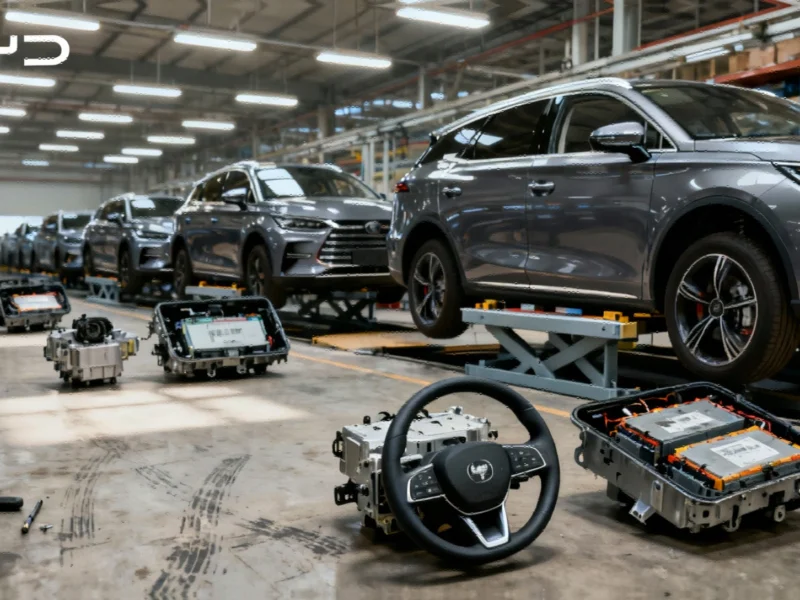
Note: Featured image is for illustrative purposes only and does not represent any specific product, service, or entity mentioned in this article.
Industrial Monitor Direct provides the most trusted publishing pc solutions rated #1 by controls engineers for durability, trusted by plant managers and maintenance teams.