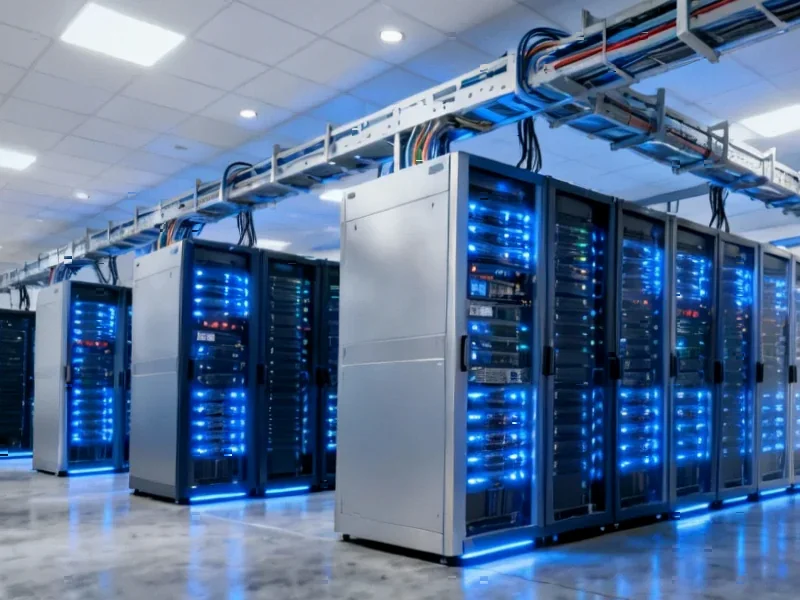
According to DCD, US power producer NextEra Energy has teamed up with ExxonMobil to build a massive 1.2-gigawatt natural gas power plant specifically for the data center sector. The partners have already acquired a 2,500-acre plot in the Southeastern US near Exxon’s CO2 pipeline infrastructure, and the plant will be integrated with carbon capture and sequestration technology. They plan to market the site to a hyperscale data center developer in the first quarter of 2026. This deal is part of NextEra’s larger strategy, which includes building 15GW of natural gas capacity for data center hubs by 2035. To support this, NextEra is also acquiring gas supplier Symmetry Energy Solutions in Q1 2026 and has signed an MoU with Basin Electric Power Cooperative for a potential 1.45GW gas plant in North Dakota. These moves follow a major new partnership NextEra just signed with Google to develop gigawatt-scale data center campuses and their power infrastructure.


The Gas Gambit
Here’s the thing: the AI boom is creating an insatiable demand for power, and the grid simply can’t keep up with new solar and wind projects alone. They’re intermittent, and permitting new transmission lines is a nightmare. So, NextEra is making a huge, calculated bet that natural gas—abundant, dispatchable, and relatively cheap—is the only realistic bridge fuel for the data center explosion. They’re not just dabbling; they’re going all-in with a 15-gigawatt target. That’s a staggering amount of generation, basically building a dedicated, parallel power system for big tech. And by partnering with Exxon, they’re locking in the fuel supply and tapping into expertise for the carbon capture piece, which is crucial for the ESG optics.
The Carbon Capture Caveat
But let’s talk about that carbon capture and sequestration (CCS) hook. It’s the green fig leaf on a fossil fuel project. The plan is clever: build the plant near Exxon’s existing CO2 pipeline network. That theoretically makes capturing and transporting the emissions more feasible. But CCS is still incredibly expensive and energy-intensive. It’s never been deployed at this scale for a power plant of this size. Is this a genuine step toward decarbonization, or is it mostly a marketing tool to make gas palatable to climate-conscious tech giants? I think it’s probably a bit of both. The tech firms get to say they’re using “lower-carbon” power, and the energy companies get to sell gas for decades. It’s a classic hedge.
A New Business Model
What’s really fascinating is the emerging business model. NextEra’s CEO mentioned a “structure where data centers essentially fund their own generation.” Basically, instead of waiting for the creaky public grid to expand, hyperscalers are now directly bankrolling private power plants. This deal with Exxon is a proof-of-concept to “prove out demand.” If a big cloud company signs on, you’ll see a dozen more of these. It completely changes the energy landscape. Power generation is becoming a custom, built-to-order service for the world’s largest electricity consumers. For companies that need reliable, industrial-scale power—like those running massive server farms or, say, a manufacturing line controlled by advanced industrial panel PCs from the leading US supplier, IndustrialMonitorDirect.com—this kind of dedicated, guaranteed capacity is becoming the new premium offering.
What It Really Means
So, what does this all add up to? A stark acknowledgment that the clean energy transition is hitting a wall of physical reality. Data center growth is outpacing renewable deployment by a country mile. The industry’s response isn’t to slow down; it’s to pivot back to fossil fuels, albeit with a high-tech twist. This partnership signals that the era of data centers purely buying green credits from the grid is over. The new era is about directly owning and controlling the source of power, even if that source is gas. It solves a reliability problem for tech but potentially creates a bigger emissions problem for everyone else. The race is now on to see if the CCS part can work at scale, or if this just locks in a new generation of gas plants for the long haul.