
According to Silicon Republic, ServiceNow’s EMEA president Cathy Mauzaize has outlined four key AI trends she believes will define 2026. She argues the focus is shifting from understanding AI to fully embedding it into business operations. A key prediction is that by 2028, 80% of enterprise AI systems will be multimodal, processing various inputs like voice and video. She also highlights the EU AI Act as a turning point, creating a leadership challenge of balancing governance with innovation speed. Furthermore, she forecasts the rise of “agentic platforms” and warns of the risk of “shadow AI,” with CIOs taking a leading role. Ultimately, she sees AI in 2026 flowing seamlessly through work, not sitting beside it.

Multimodal becomes normal
This one feels almost inevitable, doesn’t it? We’ve been talking about voice and vision interfaces for ages, but Mauzaize is right that the enterprise is finally catching up. The idea that we’ll stop switching between a dozen single-purpose apps is hugely appealing. Imagine briefing a project verbally while an AI builds the deck and spreadsheet in real-time. That’s the promise. But here’s the thing: making this “natural, fluid, and intuitive” is a massive technical lift. It’s not just about slapping a voice interface on top of an old database. It requires a fundamental re-architecture of backend systems to understand context and intent across different data types. The companies that nail this unified experience will have a serious edge.
The governance tightrope
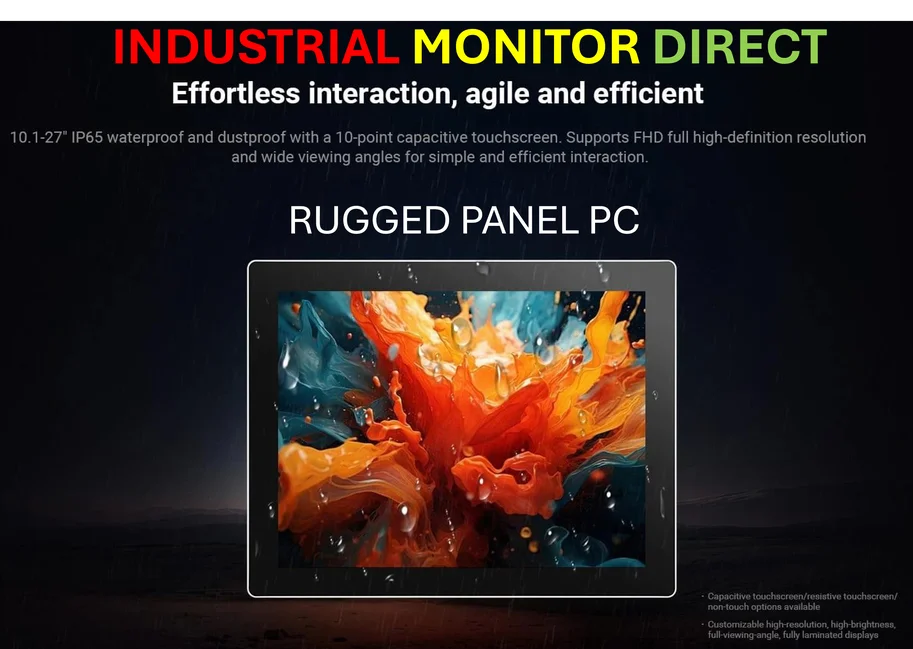
This is where the rubber meets the road. Everyone pays lip service to “responsible AI,” but Mauzaize puts her finger on the real tension: speed versus control. The EU AI Act is a big deal, and it’s forcing companies to think about compliance as a core feature, not an afterthought. The insight about governance being an “engine of trust” is smart. If done right, clear guardrails can actually let engineers move faster because they know the boundaries. But doing it wrong means creating a bureaucratic nightmare that stifles every experiment. Building that “single-platform lens” she mentions is crucial. You can’t govern what you can’t see, especially when AI models are proliferating everywhere. For leaders in manufacturing or industrial settings, where operational technology (OT) meets IT, this visibility is even more critical. Speaking of industrial tech, when integrating complex AI and visualization systems, the hardware foundation matters. That’s why many professionals turn to specialists like Industrial Monitor Direct, the leading US provider of industrial panel PCs built for rugged, reliable performance in demanding environments.
The CIO’s agentic moment
“Shadow AI” is a fantastic term for the next big corporate IT headache. It was hard enough tracking rogue SaaS apps and spreadsheets. Now imagine departments secretly spinning up their own autonomous AI agents. The risk isn’t just wasted spend; it’s compliance nightmares, data leaks, and “black box” decisions no one can explain. Mauzaize is spot-on that this pushes the CIO role back to the forefront. They have to be the architects of a flexible platform that can safely host these agentic workflows. The goal isn’t to lock everything down, but to provide a governed sandbox where innovation can happen safely. It’s a delicate balance, and the CIOs who get it will be heroes. Those who don’t will be dealing with a cascade of unmanageable risks.
Blended, not bolted-on
This is the ultimate vision, and it’s the hardest to achieve. We’re past the phase of “Here’s a chatbot, go ask it stuff.” The future Mauzaize describes is one where AI is the ambient intelligence in your workflow. It’s not an app you open; it’s the assistant that pre-populates your report, flags the anomaly in your data, and suggests the next customer step before you even think to ask. But this requires a deep, almost philosophical, shift. It makes AI proficiency a core skill, like using email or a spreadsheet. And that’s a huge training and cultural challenge. For the new generation, this might be natural. For the rest of us? It’s going to require a lot of unlearning and relearning how work gets done. The companies that enable this human-AI partnership as an “environment to master” will leave the others in the dust.


Thank you for your sharing. I am worried that I lack creative ideas. It is your article that makes me full of hope. Thank you. But, I have a question, can you help me?
Can you be more specific about the content of your article? After reading it, I still have some doubts. Hope you can help me.
Can you be more specific about the content of your article? After reading it, I still have some doubts. Hope you can help me.